
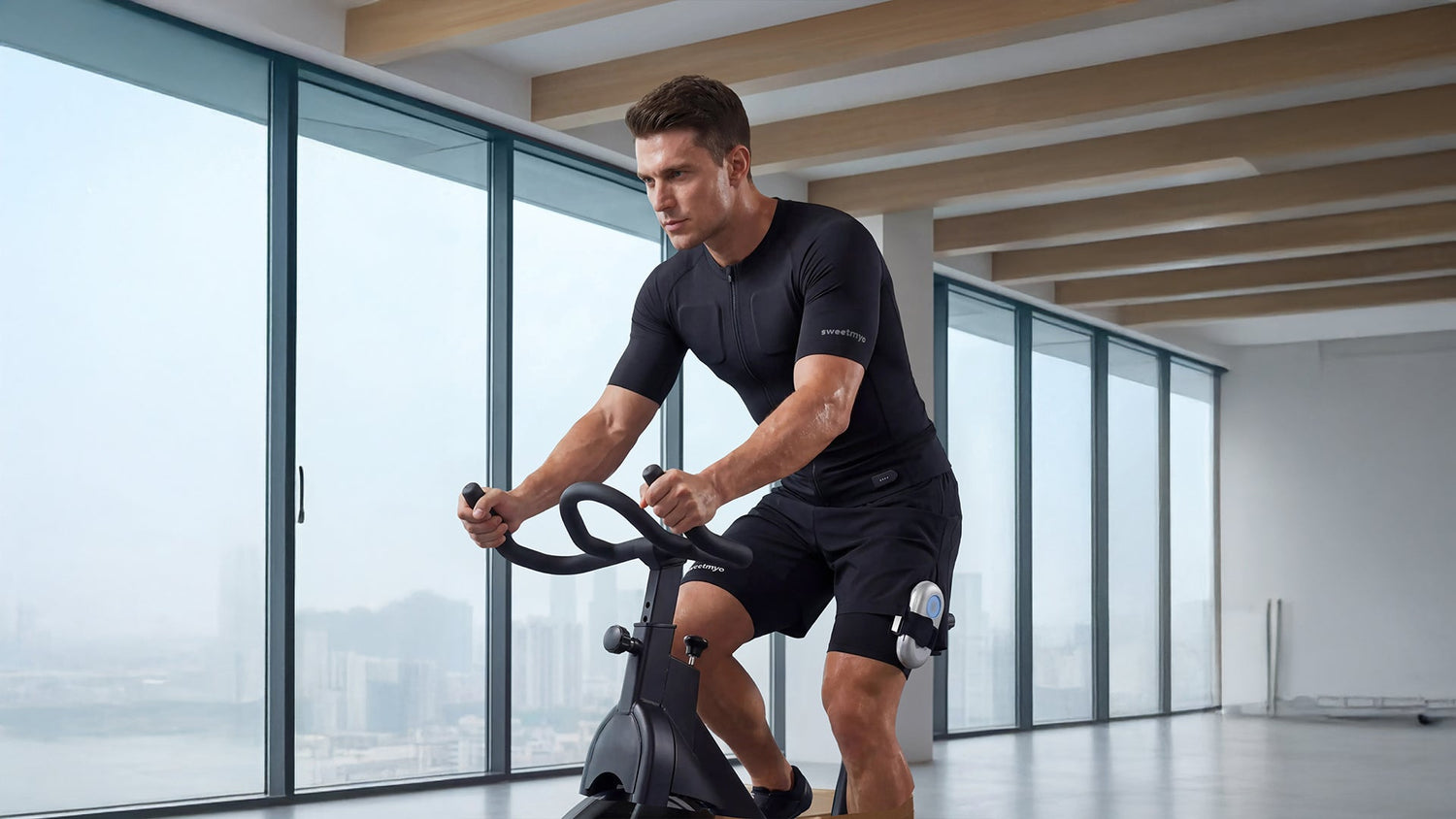
Yes, but only to a limited extent. EMS can improve muscle activation and strength, and it may support modest muscle growth when used consistently in a structured routine. The strongest evidence comes from training-focused EMS, especially whole-body EMS. It tends to help beginners, older adults, and people who cannot do enough regular resistance training more than experienced lifters. It does not replace proper training, diet, or time.
What Kind of Muscle Change Can EMS Actually Support?

To answer this well, it helps to separate muscle change into a few categories. People often use one phrase for very different goals. They may mean stronger contractions, better muscle activation, improved strength, more muscle size, or a firmer look. Those outcomes overlap, but they are not the same thing.
Strength and Muscle Activation Usually Show Up First
Muscle stimulators create repeated contractions through electrical impulses. That can improve how strongly a muscle contracts and how well you can recruit it during training. In current research, strength gains and neuromuscular improvements show up more consistently than large changes in appearance. A lot of users notice better muscle awareness before they notice anything visual.
Muscle Growth Is Possible, But It Has Limits
That supports a cautious version of “yes” for people asking do muscle stimulators build muscle. Some users may gain muscle, but the effect is usually not dramatic, and it is more likely in groups with a lower training base. Beginners and less active adults tend to respond better than highly trained lifters because they have more room to improve. Experienced lifters usually need a larger and more specific training stimulus to keep gaining size.
The Device Category Matters
Not all EMS devices are designed or used in the same way. Some are built for structured training, while others are used more casually and may deliver a much lighter stimulus. That difference matters when people ask does electrical muscle stimulation build muscle. A training-focused EMS setup may help support modest muscle growth and strength gains, but that does not mean every device will produce the same result.
Can EMS Replace Strength Training or Only Complement It?

EMS can add muscle stimulus, but it usually cannot match everything resistance training does. Weights and bodyweight training are still better for progressive overload, coordination, joint control, and long-term hypertrophy. For most people, EMS works better as a complement than a full replacement.
Traditional resistance training gives you more than muscle tension. It also trains movement patterns, balance, stability, and the ability to handle external load over time. That matters a lot if your goal is long-term muscle growth. EMS can create contractions, but it does not fully replace the training effect of moving through loaded exercises with good form and steady progression.
Situations Where EMS Can Be Useful
EMS may be a reasonable fit in a few common cases:
- You want extra muscle stimulus without adding a long gym session
- You are coming back after a long break
- You have trouble feeling a target muscle work
- You need a lower-load option on some training days
- You are older or less active and need a manageable starting point
These are the situations where muscle stimulators are most likely to feel useful in real life. They can support consistency and help fill gaps, but they are usually not enough to replace a well-designed lifting or bodyweight routine.
Which Training Variables Matter Most for Muscle Growth?

Once the “replace or complement” question is clear, the next issue is the training dose. This is where many users go wrong. They may use EMS casually, keep the intensity too low, or expect occasional sessions to create hypertrophy. Muscle growth still depends on a real training stimulus delivered often enough over time.
Intensity Needs to Be Meaningful
A mild contraction may feel unusual, but that does not mean it is strong enough to drive adaptation. Training studies on EMS typically use repeated sessions over several weeks with moderate to high intensity. A challenging but tolerable contraction matters much more than novelty. That is one reason muscle stimulators can disappoint users who never move beyond a very light setting.
Weekly Training Frequency Still Counts
Your body responds to repeated exposure, not isolated effort. Adults need muscle-strengthening activity at least two days per week, and stronger hypertrophy outcomes usually depend on enough weekly volume over time. EMS does not remove that requirement. It can add stimulus, but it still works inside the same basic logic as other muscle-building methods.
Progression and Recovery Need to Stay Balanced
The stimulus has to stay meaningful, but more is not always better. Very aggressive EMS use can increase the risk of pain, excessive soreness, skin irritation, and in extreme cases muscle damage. That matters even more for beginners who assume harder always means better. Progress matters, but safe progression matters more.
How Long Does It Take to Notice Muscle-Related Changes?

EMS can create a strong muscle contraction right away, but a visible change usually takes much longer. Better muscle awareness or a stronger contraction may show up early, while measurable changes in strength or muscle size usually require several weeks of consistent use. That is why people asking does EMS build muscle often misread the timeline. Feeling the muscle work is immediate. Seeing muscle-related change is slower.
A Realistic Timeline
- Week 1 to 2: stronger contractions, better muscle awareness, some soreness
- Week 3 to 6: possible strength improvements with regular use
- Week 6 and beyond: a better chance of measurable muscle-related change, especially in beginners or deconditioned users
This timeline also explains why muscle stimulators can feel more effective to beginners than to experienced lifters. A beginner often has more room to improve. A trained person usually needs more total stimulus to see visible growth.
What Expectations Are Unrealistic for Beginners?

EMS may temporarily strengthen, tone, or firm muscles, but that does not mean it will quickly change your body composition or create a dramatic visual result. Users should not judge success by scale changes, waist size, or a rapid before-and-after transformation.
| Unrealistic expectation | More realistic expectation |
|---|---|
| EMS will build a lot of muscle without exercise | EMS may support some muscle growth and strength, mainly with consistent use and a solid training context |
| EMS will quickly burn fat | EMS is not a reliable shortcut for weight loss or visible fat reduction |
| A few sessions will change how I look | Real changes usually take several weeks of consistent use |
| EMS is equal to a full strength program for most people | EMS is usually better as support than as a full replacement |
| Higher intensity is always better | Too much intensity raises the risk of pain, skin issues, and poor recovery |
Use EMS as a Smarter Support Tool for Muscle Growth

Muscle stimulators can be useful when the goal is to improve muscle activation, add extra stimulus, or keep training consistent during busy periods. They work best alongside a solid resistance plan, not in place of one. If you cannot train as much as you want, EMS may still help support strength and modest muscle growth. If you can train normally, keep weights or bodyweight work as the foundation. Real muscle development still depends on enough challenge, enough frequency, and enough time.
FAQs

Q1: Can you use EMS on the same day as strength training?
Yes. EMS can be used on the same day as lifting if the total training stress stays manageable. Pairing the two may increase muscle activation, but too much volume can hurt recovery. Keep the session short and reduce intensity if soreness builds.
Q2: Does electrode placement affect EMS results?
Yes. Electrode placement has a major effect on how well EMS targets a muscle. Poor placement can reduce contraction quality or shift the stimulus to nearby areas. Follow the device guide carefully so the target muscle receives a clear, even contraction.
Q3: Is muscle soreness a sign that EMS is working?
No. Soreness is not required for EMS to be effective. Some people feel mild soreness, especially when they are new to EMS, but progress is better judged by contraction quality, strength changes, and consistent training rather than post-session discomfort.
Q4: Can EMS help maintain muscle during reduced activity?
Yes. EMS may help preserve muscle activation and support maintenance when normal training is limited by travel, schedule changes, or reduced activity. It is usually more useful for maintaining function than creating major new muscle growth during those periods.
Q5: Should you increase protein intake when using EMS for muscle support?
Yes. Protein still matters because EMS does not replace the basic nutrition needed for muscle repair and growth. If your goal is muscle support, adequate daily protein and overall calorie intake make EMS more useful than relying on stimulation alone.


コメントを書く
このサイトはhCaptchaによって保護されており、hCaptchaプライバシーポリシーおよび利用規約が適用されます。