

A full-body EMS suit usually targets large muscle zones across the upper body, core, glutes, and thighs. The exact coverage depends on where the garment's electrodes sit because a suit cannot directly stimulate a muscle without an electrode over it. This means "full-body" does not necessarily include every small stabilizer or the calves. Understanding the electrode map, garment fit, and individual zone controls helps you match the system to your training goals.
Which Muscle Groups Does a Full-Body EMS Suit Usually Cover?
Most full-body EMS systems divide the body into several large zones rather than trying to isolate every individual muscle.
| Muscle Zone | Muscles Commonly Covered | Related Movements |
|---|---|---|
| Upper body | Upper and mid-back, chest, upper arms, and sometimes shoulders | Rows, presses, arm raises, and posture exercises |
| Core | Abdominals, obliques, and lower trunk | Bracing, planks, standing marches, and controlled rotation |
| Glutes | Gluteal muscles around the hips and seat | Squats, bridges, lunges, and hip hinges |
| Thighs | Quadriceps and hamstrings | Squats, lunges, wall sits, and step movements |
| Calves | Calf muscles, only when dedicated electrodes are present | Calf raises and lower-leg movements |
Not every suit covers every zone in this table. A short-sleeve top may reach the upper arms but not the forearms, while shorts may cover the thighs without including the calves. The electrode map is more reliable than the "full-body" label when comparing systems.
How Electrode Placement Determines Which Muscles Are Targeted
EMS garments deliver controlled electrical impulses through integrated contact panels. These impulses activate motor nerves and produce contractions in the healthy muscles beneath the electrodes.
The stimulation does not spread evenly through the entire garment. A panel positioned over the quadriceps directly stimulates that area, while a squat may also recruit the glutes, hamstrings, and core through voluntary movement. Those additional muscles are working because of the exercise, not necessarily because they all receive direct stimulation.
This distinction also explains why an EMS suit does not directly train joints, tendons, bones, or every small stabilizing muscle. Movement quality, balance, breathing, and exercise technique still matter.
How Stimulation Differs Across the Body
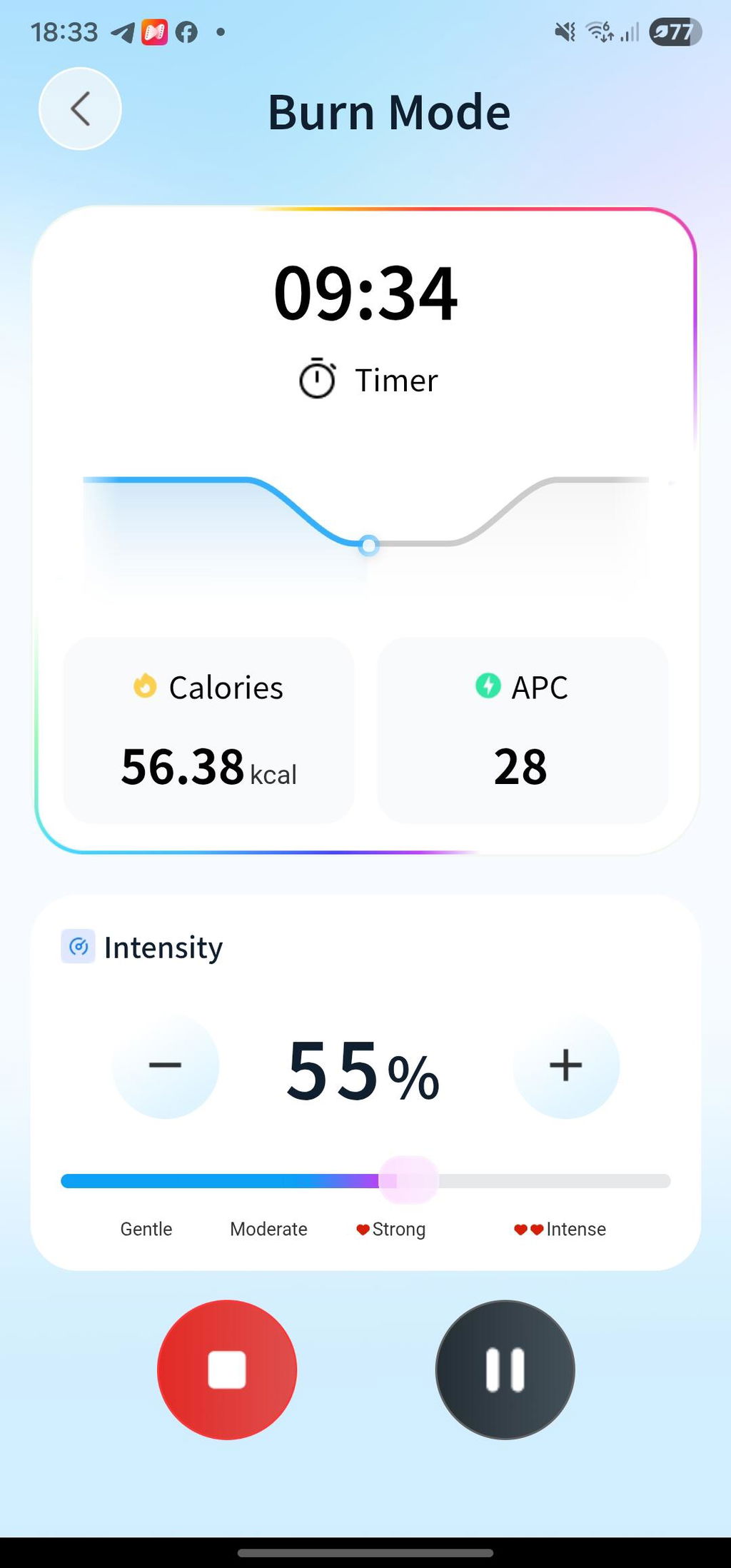
Muscle size, skin sensitivity, garment contact, posture, and exercise choice can make each area feel different. One universal intensity setting is rarely appropriate for the whole body.
Arms, Chest, and Back
Upper-body electrodes may feel noticeable at relatively low settings, especially around the arms or chest. Begin conservatively and use movements that you can perform without shrugging, twisting, or holding your breath.
Rows, wall push-ups, shoulder-blade retractions, and slow arm raises can help connect the stimulation with a clear movement pattern. If an area feels sharp rather than firm and controlled, lower its intensity.
Abdominals and Core
Core stimulation should create manageable abdominal engagement without restricting normal breathing. Suitable movements include dead bugs, standing marches, pelvic tilts, modified planks, and slow squats with deliberate bracing.
The goal is not to make the abdomen feel as intense as possible. If the setting disrupts your breathing or posture, it is too high for that movement.
Glutes and Thighs
The glutes, quadriceps, and hamstrings are larger muscle groups, so their contractions may feel broader than stimulation around the arms or abdomen.
Squats, glute bridges, lunges, hip hinges, and wall sits are common choices. Increase intensity gradually because a setting that feels manageable during the session may still create substantial fatigue or soreness afterward.
Match Each Muscle Zone to the Right Movement
EMS is most useful for fitness when stimulation is paired with controlled movement. The exercise determines the movement pattern, while the electrode zone adds stimulation to the muscles underneath it.
| Training Focus | Practical Movements | Adjustment Cue |
|---|---|---|
| Arms and upper back | Light rows and arm raises | Keep the shoulders relaxed |
| Chest | Wall push-ups or controlled pressing | Maintain steady breathing |
| Core | Dead bugs and standing marches | Avoid arching or twisting |
| Glutes | Bridges, squats, and hip hinges | Keep pressure balanced through both feet |
| Thighs | Squats, lunges, and wall sits | Increase intensity gradually |
Choose exercises that already suit your mobility and training experience. EMS should not be used to force a painful range of motion or compensate for unstable form.

Why One Muscle Zone May Feel Stronger Than Another
Uneven sensation does not always mean that one muscle is receiving a more effective workout. Common causes include:
- An electrode not sitting flat against the skin
- A loose, folded, or twisted section of the garment
- Dry skin or lotion interfering with contact
- Differences in sensitivity between body areas
- Different amounts of muscle and tissue beneath each electrode
- An exercise shifting pressure away from part of the suit
Before increasing intensity, confirm that the garment fits closely, every contact area sits flat, and the sensation feels balanced. Keep the skin clean and free of oils or lotions, then begin at a low intensity and increase it gradually only while the sensation remains comfortable.
Use EMS Only on Healthy Muscles and With Controlled Intensity
A full-body EMS suit should be used according to its fixed electrode layout. Do not add separate pads, modify connectors, or attempt to redirect stimulation toward sensitive areas.
Start at a low intensity and stop the session if you experience burning, sharp pain, dizziness, skin irritation, chest discomfort, or another abnormal sensation. Improper use may cause pain, skin reactions, or interference with implanted devices, so always follow the product instructions and contraindications.
Do not use the suit if you have a pacemaker or defibrillator, are pregnant, or have a condition listed as a contraindication in the product instructions. Consult a qualified clinician before use if you have a medical condition, an implant, or uncertainty about whether EMS is appropriate for you.
SweetMYO is intended for muscle activation and conditioning in healthy adults. It is not a medical treatment for injuries or diseases.
Choose Electrode Coverage That Matches Your Training Goals
Before choosing an EMS suit, decide which areas you actually want to prioritize. Look beyond the number of electrodes and compare:
- Where the electrodes sit
- Whether important zones can be adjusted independently
- How closely the garment fits
- Whether you can move and breathe normally
- How quickly you can stop or reduce stimulation
- Whether the system includes clear setup and safety instructions
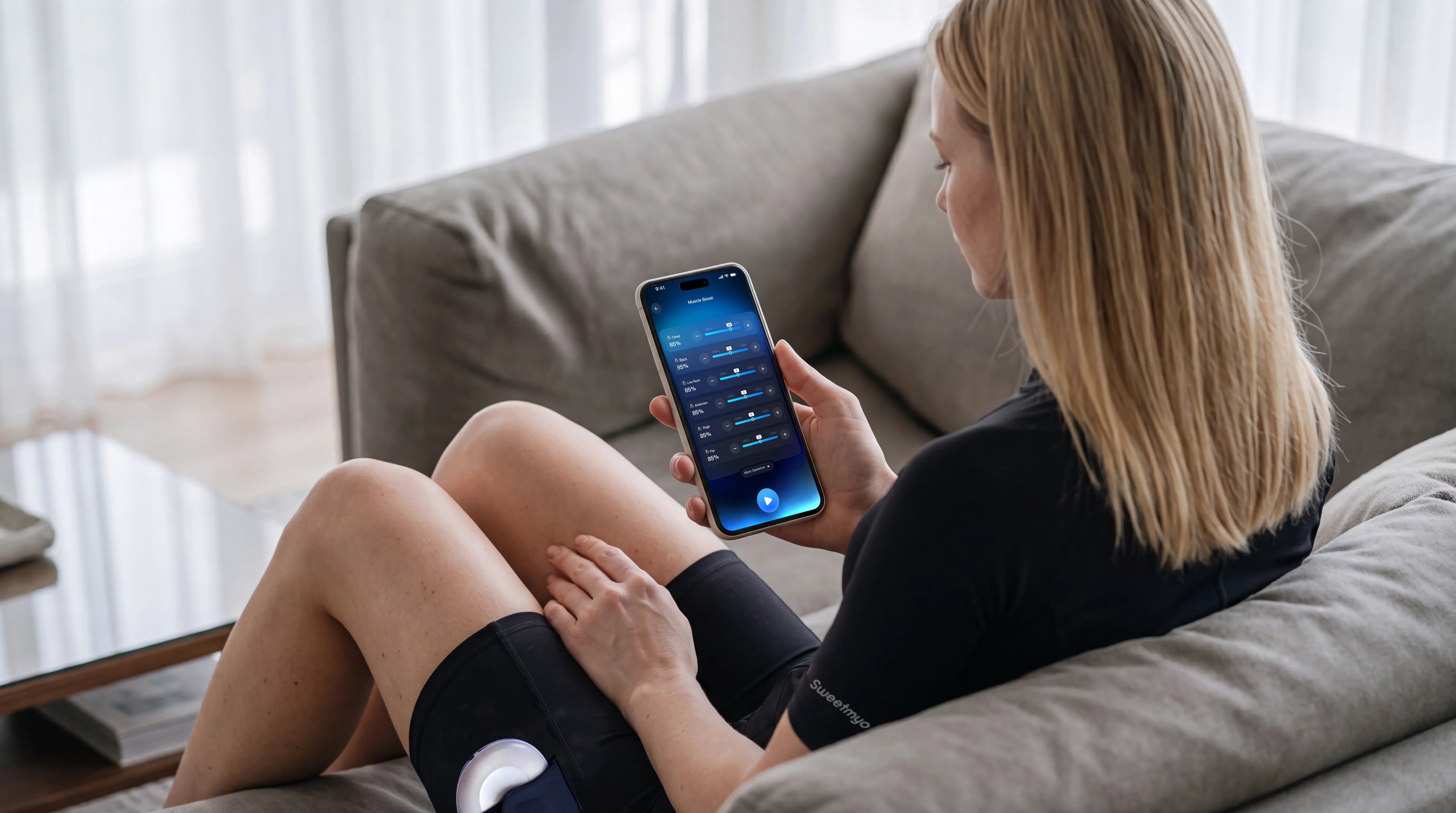
If you want to train several major muscle zones at home without arranging separate adhesive pads, our AI full-body EMS suit combines a fitted garment with app-controlled intensity zones. Compare its coverage with the areas you want to train before selecting your size.
FAQs about Full-Body EMS Muscle Coverage
Q1. Should You Use the Same EMS Intensity for Every Muscle Group?
No. Each muscle zone can differ in size, sensitivity, electrode contact, and tolerance. The arms or abdomen may feel strong at a setting that seems mild on the thighs. Adjust each available zone separately and prioritize controlled contractions, steady breathing, and stable movement rather than matching the numbers.
Q2. Does a Full-Body EMS Suit Always Target the Calves and Shoulders?
No. Calf and shoulder coverage depends on the garment design and electrode placement. Some suits end above the knees or have no dedicated shoulder panels. Check the electrode map rather than assuming that every muscle is included because the product is described as full-body.
Q3. Can Abdominal EMS Reduce Belly Fat?
Abdominal EMS causes repeated muscle contractions, which train the abdominal muscles and use some energy. However, it cannot selectively burn fat from the belly. Its main benefit is supporting abdominal muscle activation, strength, and tone. For meaningful fat loss, EMS works best as part of a routine that also includes regular exercise and a balanced diet.
Q4. Can You Wear an EMS Suit Over Regular Workout Clothes?
Not unless the product instructions specifically permit it. Integrated electrodes generally require stable contact with the intended areas, and ordinary clothing may interfere with conductivity. SweetMYO should be worn according to its fitting instructions so the electrode panels remain flat against clean skin.
Q5. Can a Full-Body EMS Suit Replace Every Strength Exercise?
No. EMS adds contractions to the muscles beneath its electrodes, but it does not replace all the coordination, balance, joint control, and movement skills developed through exercise. Treat it as a training tool that works alongside controlled movements rather than as a shortcut that trains every physical ability.

コメントを書く
このサイトはhCaptchaによって保護されており、hCaptchaプライバシーポリシーおよび利用規約が適用されます。