

EMS Pilates combines controlled Pilates-style movements with electrical muscle stimulation. The movements remain slow and low-impact, while an EMS suit or electrodes add external impulses that make muscle contractions more noticeable. This combination can support short, focused sessions for the core, glutes, and legs without jumping or heavy weights. However, low-impact does not mean effortless or risk-free. Good form, conservative intensity, gradual progression, and enough recovery still matter.

Quick Takeaways
- EMS Pilates is Pilates-style movement performed with electrical muscle stimulation.
- It can make contractions feel stronger, but it does not correct form automatically.
- Mat exercises such as bridges, dead bugs, and bird dogs are easier to control than fast or unstable movements.
- Beginners should use familiar exercises, low intensity, and shorter sessions.
- EMS Pilates can complement strength, cardio, and mobility work, but it does not replace all three.
What Is EMS Pilates and How Does It Work?
EMS Pilates pairs two different training tools:
- Pilates-style movement uses controlled motion, breathing, alignment, and trunk stability.
- Electrical muscle stimulation sends impulses through electrodes to produce muscle contractions.
During a normal Pilates movement, your nervous system tells the working muscles to contract. EMS adds an external signal at the same time. You still perform the bridge, leg lift, squat, or core exercise yourself. The stimulation does not move your body through the exercise or decide whether your alignment is correct.
This distinction matters. EMS can make a contraction easier to notice and increase the muscular demand of a simple exercise. Pilates supplies the movement control. The two methods work together, but they do different jobs.
Research on this exact combination remains limited. One of the few available studies tested EMS combined with mat Pilates for eight weeks in 30 women with fibromyalgia, so its findings should not be generalized to healthy adults.
Why Low-Impact Does Not Mean Low-Effort
Low-impact exercise limits abrupt landing forces and repeated pounding on the joints. Many mat-based Pilates movements qualify because they are performed lying, seated, kneeling, or standing without jumping.
EMS does not turn these movements into high-impact exercise. It can still make them more demanding by adding repeated muscle contractions. A glute bridge may look simple, but it can feel much harder when the glutes, hamstrings, and core are being stimulated.
Keep these two ideas separate:
- Movement impact describes the forces created by the exercise.
- Stimulation intensity describes how strongly the EMS device makes the muscles contract.
A session can be gentle on the joints while still creating substantial muscle fatigue. Increasing the device intensity is not a substitute for better control, and stronger stimulation is not automatically more effective.
EMS Pilates vs. Mat Pilates vs. Reformer Pilates
All three approaches can use slow movement and core control, but they create resistance differently.
| Factor | Mat Pilates | Reformer Pilates | EMS Pilates |
|---|---|---|---|
| Main resistance | Body weight and gravity | Springs, straps, carriage, and body weight | Body weight plus electrical stimulation |
| Equipment | Mat; small props are optional | Pilates reformer | EMS suit or electrodes; a mat may be used |
| Main emphasis | Control, breathing, mobility, and core stability | Controlled resistance, movement range, and stability | Muscle contraction during controlled, low-impact movement |
| External load | Low | Adjustable spring resistance | Adjustable stimulation rather than mechanical resistance |
| Best starting point | Learning Pilates fundamentals | Guided equipment-based practice | Familiar, stable movements at low stimulation |
EMS Pilates is not automatically better than regular Pilates. Mat Pilates is easier to begin without equipment. A reformer provides physical resistance and movement feedback through its springs and carriage. EMS adds muscle stimulation but cannot reproduce the reformer's support, resistance direction, or movement range.
Choose the method that matches your goal. Someone learning breath and alignment may benefit most from mat instruction first. Someone seeking controlled mechanical resistance may prefer a reformer. Someone who already understands the basic movements may use EMS to add another layer of muscular effort at home.
What EMS Can Add to Pilates-Style Movement
The most practical benefit is not automatic "perfect form." It is a more noticeable contraction during exercises that are easy to perform without much tension.
| Movement | Main Focus | What to Notice |
|---|---|---|
| Glute bridge | Glutes, hamstrings, and trunk | Hips rise without the lower back taking over |
| Dead bug | Abdominal control | Trunk stays steady while opposite limbs move |
| Bird dog | Core and hip stability | Pelvis remains level as one arm and leg extend |
| Side leg lift | Outer hips and thighs | Leg moves without the waist collapsing |
| Wall sit | Quads, glutes, and core | Pressure stays even through both feet |
EMS may make the working areas easier to feel, but sensation alone does not confirm correct technique. If the exercise becomes jerky, your breathing changes, or you lose alignment, reduce the stimulation or choose an easier variation.

Five Beginner-Friendly EMS Pilates Exercises
Learn each movement without stimulation before adding EMS. Use a pain-free range and stop when you can no longer maintain control.
Glute Bridge
Lie on your back with your knees bent and feet planted. Exhale, tighten the trunk gently, and lift your hips until the shoulders, hips, and knees form a comfortable line. Pause briefly, then lower with control. Avoid forcing the hips higher by arching the lower back.
Heel Tap From Tabletop
Lie on your back and bring one or both legs into a tabletop position. Keep the pelvis still as one heel lowers toward the mat. Return it slowly and change sides. Reduce the range if your lower back begins to lift or arch.
Bird Dog
Begin on your hands and knees. Extend one leg behind you. Add the opposite arm only if the trunk stays steady. Keep the hips level and avoid shifting weight sharply from side to side.
Side-Lying Leg Lift
Lie on one side with the lower knee bent for support. Keep the upper leg long and lift it through a small range without rolling the pelvis backward. Lower slowly. The movement should come from the hip rather than the waist.
Supported Wall Squat
Stand with your back against a wall and your feet slightly forward. Slide down only as far as you can control, then press through both feet to rise. Keep the range shallow during early sessions.
These are deliberately simple. Complex balance drills, fast transitions, and deep ranges make it harder to manage movement and stimulation at the same time.

How to Structure a 15–20 Minute Beginner Session
A short session is enough when the goal is to learn how your body responds. Use this structure as a template, not a fixed prescription.
Preparation: 3 Minutes
- Check that the suit fits securely and the electrodes have stable contact.
- Start the device at its lowest practical intensity.
- Practice relaxed breathing, pelvic tilts, and gentle marching.
Controlled Movement: 10–12 Minutes
Choose three or four familiar exercises. Perform each slowly for 30–45 seconds, then rest and reset your position. Repeat the circuit only while your breathing and form remain steady.
Cool-Down: 2–5 Minutes
Reduce or stop the stimulation. Walk around, breathe normally, and notice whether any area feels unusually painful, weak, irritated, or swollen.
If you are new to electrical stimulation, use the same gradual approach recommended for beginner EMS training at home: start with short, simple sessions and increase only one variable at a time, whether exercise difficulty, session length, or stimulation intensity.
Who May Find EMS Pilates Useful?
EMS Pilates may suit adults who want a low-impact training option and can use electrical stimulation safely. It can be especially practical for:
- Busy people who want a short home session
- Beginners learning to notice muscle effort during simple movements
- Experienced exercisers using a lighter session between harder training days
- Apartment dwellers who need quiet, equipment-light exercise
- People who prefer controlled movement over jumping or heavy external loads
It is not a rehabilitation program by default. Pain, recent surgery, an unresolved injury, or a diagnosed movement problem calls for guidance from a qualified healthcare or exercise professional.
Safety Rules for EMS Pilates at Home
Because high-intensity whole-body EMS can place more demand on the muscles than the movement suggests, using whole-body EMS safely means screening for health risks, adapting gradually, allowing enough recovery, and seeking close supervision, especially for first-time users.
Use these rules for a safer home session:
- Read the device instructions and contraindications before use.
- Start with low stimulation and a shorter session.
- Use movements you can already perform with control.
- Do not place electrodes over open wounds, irritated skin, or painful areas.
- Stop for burning, sharp pain, dizziness, breathing difficulty, or unusual weakness.
- Allow enough recovery before another strength-focused EMS session.
- Seek urgent medical care for severe muscle pain, marked swelling or weakness, or dark urine after training.
Do not use EMS during pregnancy or with a pacemaker or another implanted electronic device. Ask a healthcare professional before use if you have epilepsy, a heart or circulation condition, a recent operation or injury, a metal implant near the stimulation area, or another significant medical concern.
An FDA registration or device listing records regulatory information; it does not mean a product is approved or cleared, prove results, or guarantee that a particular workout is suitable for you.

Make EMS Pilates Part of a Balanced Routine
EMS Pilates can support controlled strength work, but it does not cover every fitness need. Walking, cycling, or another aerobic activity develops cardiovascular capacity. Progressive resistance work challenges the muscles and bones through load. Mobility and balance practice address movement qualities that stimulation alone cannot provide.
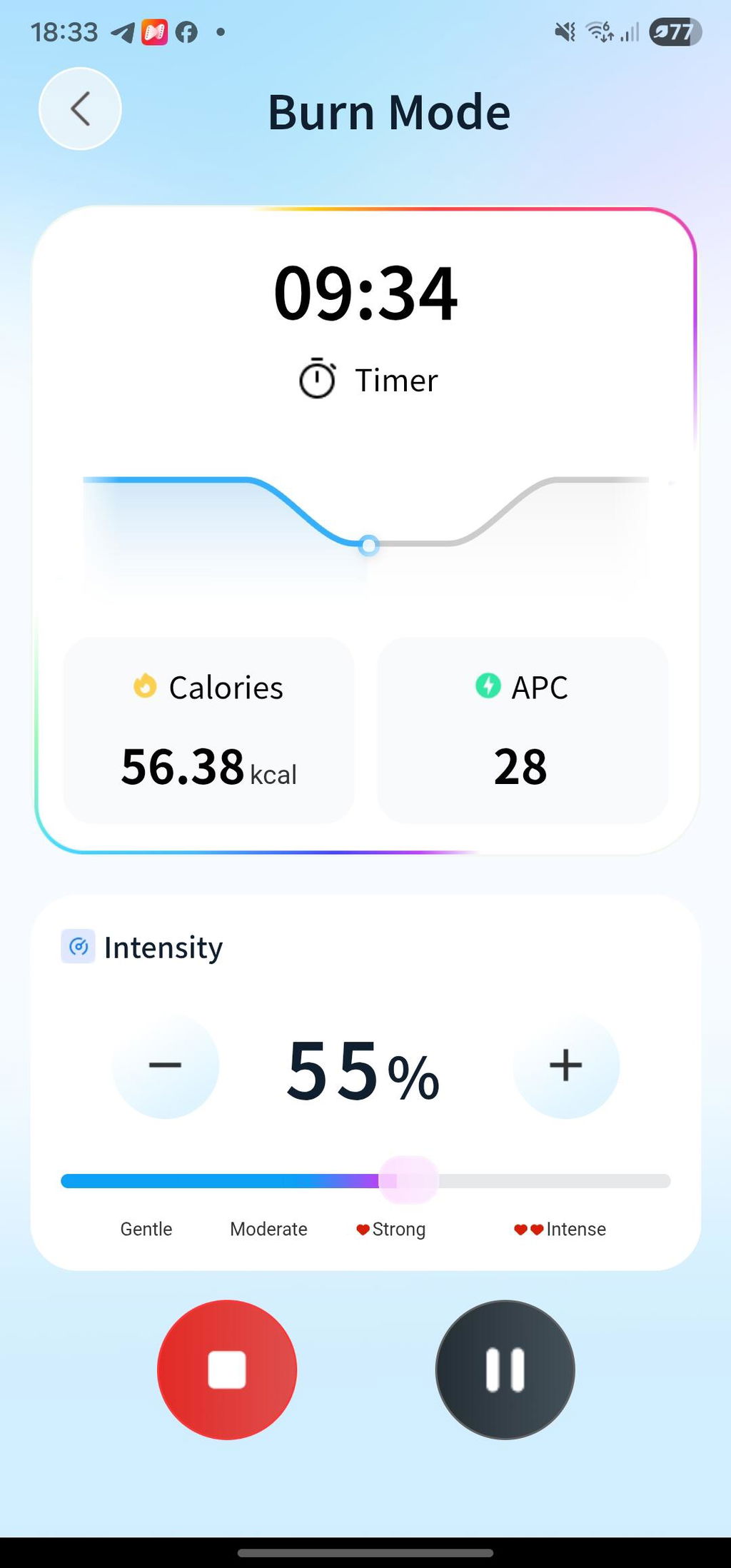
For home users, our AI Full-Body EMS Suit offers app-guided 20-minute sessions and nine training programs, including Core Balance, Power, and Endurance. On a Pilates-style day, choose a manageable program and keep the movements simple. A repeatable session with clean form is more useful than the strongest setting you can tolerate.
Use EMS Pilates as one part of a weekly routine. Build control first, add intensity gradually, and let recovery guide your progress.
FAQs about EMS Pilates
Q1. Can You Do EMS Pilates Without a Reformer?
Yes. EMS Pilates can be performed on a mat with controlled bodyweight movements such as bridges, heel taps, bird dogs, and side leg lifts. A reformer is optional. It provides spring resistance and movement support, which an EMS suit does not reproduce.
Q2. Does EMS Pilates Count as Cardio?
Not usually. EMS Pilates is mainly a muscle activation, strength, and control session. Your heart rate may rise, but that does not provide the same sustained aerobic challenge as brisk walking, cycling, swimming, or running. Keep regular cardio in a balanced routine.
Q3. Can EMS Pilates Reduce Belly Fat?
No exercise can target fat loss from one body area. EMS Pilates can train the abdominal and trunk muscles, but visible fat loss depends on overall energy balance, nutrition, activity, sleep, and consistency. Stronger core muscles do not guarantee a smaller waist.
Q4. Is Soreness Normal After EMS Pilates?
Mild muscle soreness can occur, especially after a first session or an intensity increase. Severe pain, major swelling, unusual weakness, or dark urine is not normal and needs prompt medical attention. Reduce the next session's intensity or duration if ordinary soreness lasts several days.
Q5. Can You Start EMS Pilates After Pregnancy?
Only after receiving appropriate postpartum clearance. Recovery timing varies with delivery, healing, pelvic floor symptoms, abdominal separation, and other complications. Start with clinician-approved movement before adding electrical stimulation. EMS should not be used during pregnancy, and it should not replace postpartum rehabilitation.


Leave a comment
This site is protected by hCaptcha and the hCaptcha Privacy Policy and Terms of Service apply.