

A beginner EMS workout should use simple movements, moderate stimulation, and controlled pacing. This 20-minute full-body routine combines chair squats, wall push-ups, glute bridges, supported lunges, bird dogs, and standing rows. Each movement has an easier option, and no weights are required. Treat 20 minutes as a post-familiarization target. Your first session may be shorter.
Decide Whether You Are Ready for a 20-Minute Session

Twenty minutes is a common length for guided EMS training. New users may need a shorter session while learning how the stimulation feels and how to operate the device.
New users should begin with a reduced-volume first session, keep perceived intensity moderate, and avoid training to exhaustion. The guideline also recommends no more than one 20-minute whole-body session per week during the first 8 to 10 weeks. Qualified supervision is strongly encouraged, especially during familiarization.
Before starting, prepare your home EMS setup by checking suit contact, clearing the training area, and keeping the controls within reach. Review all contraindications and safety instructions in the user manual and app, and postpone training if you are ill or have a fever.
Do not use an EMS suit if you have an implanted electronic device, such as a pacemaker or defibrillator, or if you are pregnant. People with certain heart or circulation conditions should also avoid use. Consult a qualified healthcare professional if you have a medical condition or are recovering from surgery or injury.
Choose an Intensity That Preserves Your Form

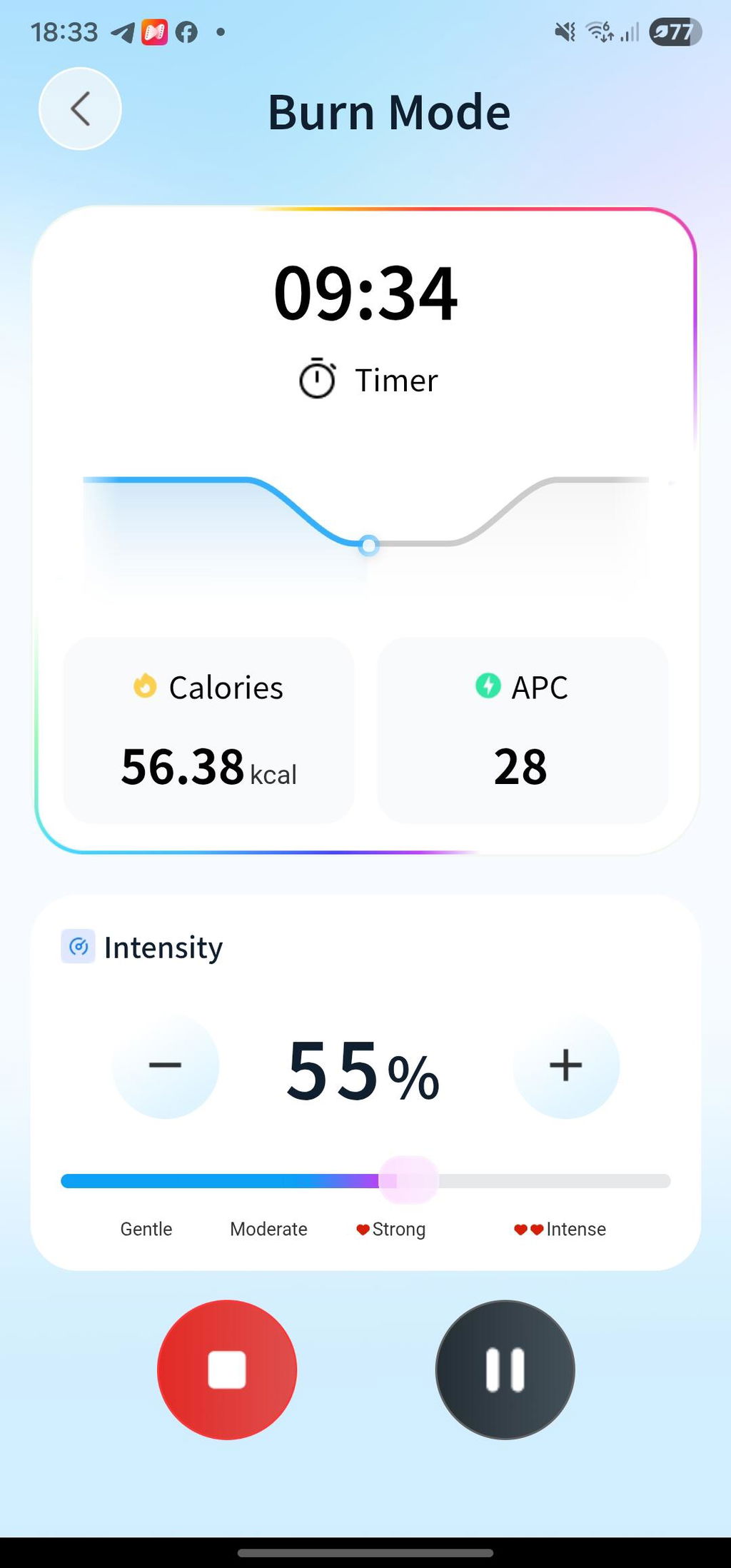
The stimulation should feel clear and firm without becoming sharp, painful, or overwhelming. During early sessions, aim for a perceived intensity of about 4 out of 10, or “somewhat strong”. This is a perceived-exertion rating. App numbers may use a different scale.
The intensity is manageable when you can:
- breathe continuously;
- speak a short sentence;
- maintain steady joint alignment;
- control the beginning and end of every repetition; and
- stay relaxed between pulses when using an intermittent program.
Reduce the stimulation as soon as your form changes. Stop the session if you experience sharp pain, burning, dizziness, nausea, unusual shortness of breath, chest discomfort, or another concerning symptom.
Follow This 20-Minute Beginner EMS Workout

The schedule below is a general workout example. It uses 30 seconds of controlled movement followed by 30 seconds to reset. Always follow the pulse cycle and instructions provided by your app. The sample timing should never override the device program.

Choose the training program recommended by the app, then keep the stimulation low during familiarization. Our Full-Body EMS Suit provides app-guided programs and adjustable stimulation intensity.
| Time | Movement | Main Focus |
|---|---|---|
| 0:00–1:00 | March in place | Easy movement and stimulation check |
| 1:00–2:00 | Shoulder rolls and arm reaches | Upper-body mobility |
| 2:00–3:00 | Shallow chair squats | Lower-body warm-up |
| 3:00–9:00 | Six-exercise circuit, round 1 | Controlled full-body movement |
| 9:00–15:00 | Six-exercise circuit, round 2 | Repeat with the same intensity |
| 15:00–18:00 | Chair squat, wall push-up, and standing row | Technique-focused final round |
| 18:00–19:00 | Easy march | Gradual recovery |
| 19:00–20:00 | Gentle mobility | Relaxed shoulder, hip, and ankle movement |
Warm-Up: 0:00–3:00
Begin with light stimulation. March at an easy pace for one minute, allowing your arms to move naturally. Continue with slow shoulder rolls and comfortable overhead reaches. Finish with shallow chair squats while checking that each electrode area feels comfortable.
The warm-up is a calibration period. Lower the intensity or adjust the suit if one area feels sharp, patchy, or much stronger than the others.

Main Circuit: 3:00–15:00
Perform each exercise for 30 seconds, then use 30 seconds to reset your posture and prepare for the next movement. Complete all six exercises twice.
- Chair squat: Stand in front of a chair with your feet about hip- to shoulder-width apart. Move your hips back, touch the chair lightly, and stand. Use a higher chair or reduce the squat depth if your heels lift or your knees move inward.
- Wall push-up: Place your hands on a wall slightly wider than your shoulders. Bend your elbows as your body moves toward the wall, then press away. Step closer to the wall if your hips sag or your shoulders rise toward your ears.
- Glute bridge: Lie on your back with your knees bent and feet flat. Press through your feet, lift your hips to a comfortable height, and lower slowly. Keep your ribs down and stop before your lower back begins to arch.
- Supported reverse lunge: Hold a stable chair or wall. Step one foot back, lower within a controlled range, and return to standing. Alternate sides. Replace lunges with another set of chair squats if balance feels uncertain.
- Bird dog: Start on your hands and knees. Extend one arm or one leg while keeping your trunk still. Progress to the opposite arm and leg only when your hips remain level.
- Standing row: Reach your arms forward, then draw your elbows back and gently squeeze your shoulder blades. Keep your shoulders down and your ribs stacked over your pelvis. Use a smaller arm movement if the upper-body stimulation disrupts your posture.
If getting down to the floor interrupts the session, replace glute bridges and bird dogs with chair squats and standing rows. Stable movement matters more than completing every exercise.
Technique Round: 15:00–18:00
Repeat the chair squat, wall push-up, and standing row. Perform each movement for 30 seconds and reset for 30 seconds. Keep the same stimulation level used in the main circuit. This round is for clean repetitions, so reduce the range when fatigue changes your form.
Cool-Down: 18:00–20:00
Lower the stimulation and march slowly for one minute. Use the final minute for relaxed shoulder, hip, and ankle movements. Turn the stimulation to the lowest comfortable level or off as directed by the app.
Progress the Workout Without Increasing Everything at Once

Repeat the same beginner EMS training exercises until the sequence feels predictable. Use the following progression order:
- Complete every movement with steady form.
- Increase the range of motion slightly.
- Slow each repetition while maintaining normal breathing.
- Raise stimulation in a small step.
- Add a more demanding exercise variation.
Change one variable at a time. Increasing stimulation, movement difficulty, and training frequency together makes it difficult to identify which change caused excessive fatigue or soreness.
Muscle fatigue may become more noticeable several hours after the workout. Use a recovery-based EMS schedule to plan later sessions. Wait until significant soreness, weakness, and movement restriction have resolved before repeating an intensive whole-body workout.
Strong muscle pain, marked swelling, unusual weakness, or cola-colored urine requires prompt medical attention. These symptoms can indicate excessive muscle damage and should not be treated as ordinary post-workout soreness.
Beginner EMS Workout FAQs
Q1. Do You Need Weights for a Beginner EMS Workout?
No. Bodyweight movements provide enough coordination and mechanical demand while you learn the stimulation. Adding weights makes form harder to monitor. External resistance can be introduced later when you can complete the routine cleanly and the device instructions allow it.
Q2. What Should You Do if One Area Feels Too Weak?
Pause and check suit fit, electrode position, and skin contact first. Adjust the intensity only after confirming that the suit is positioned correctly. Increase the weaker-feeling area in a small step when the app allows individual adjustment. Do not repeat the complete workout immediately.
Q3. Can You Exercise While You Are Still Sore?
Light walking or mobility may feel comfortable with mild stiffness. Wait before another intensive EMS session if soreness restricts movement or your muscles feel unusually weak. Persistent or severe symptoms warrant medical advice.
Q4. Can EMS Replace Cardio and Regular Strength Training?
No. EMS provides an additional muscle-training stimulus within a short session. A balanced routine also includes everyday movement, aerobic activity, mobility, and progressive strength work suited to your goals. Nutrition, sleep, and recovery continue to influence results.
Q5. Should You Eat Before an EMS Workout?
Avoid beginning an intensive session after prolonged fasting. Eat normally and allow enough time for comfortable digestion. If you need extra fuel, choose a light, familiar snack around two hours beforehand. People who manage blood glucose or digestive conditions should follow individualized clinical advice.
Keep the First Weeks Controlled and Repeatable
Simple movements make it easier to monitor posture, breathing, and stimulation at the same time. Build toward the full 20-minute workout after familiarization, keep the early intensity moderate, and progress one variable at a time. Finish each session with enough control to recover comfortably before the next one.



Leave a comment
This site is protected by hCaptcha and the hCaptcha Privacy Policy and Terms of Service apply.