
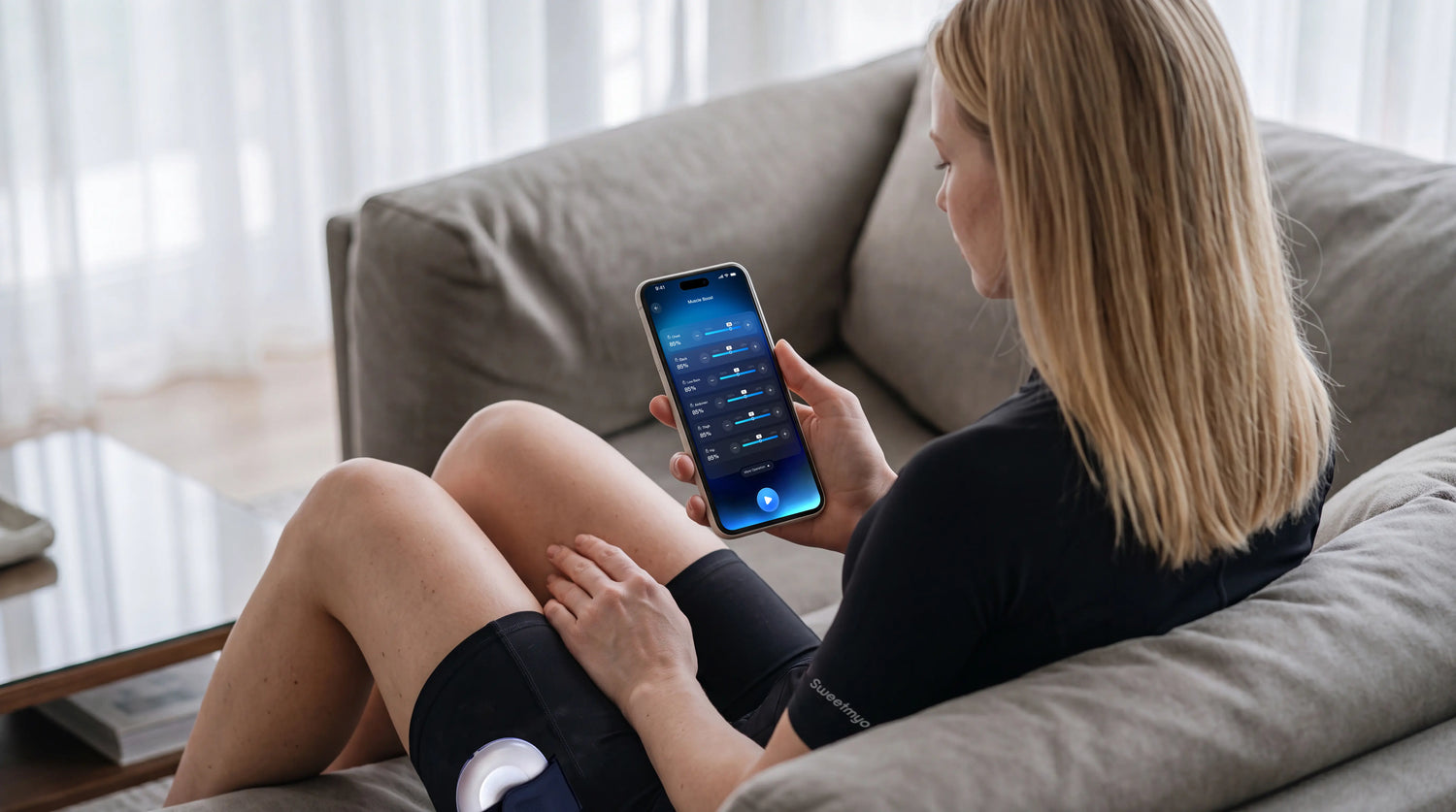
Limited time, long desk hours, and inconvenient gym schedules can disrupt a regular training routine. Smart muscle stimulators combine electrical muscle stimulation with guided programs, adjustable zones, and customizable saved settings. Their value depends on clear controls, a comfortable fit, and practical daily use.

How Smart Muscle Stimulators Go Beyond Basic EMS Pads
Basic EMS pads and connected wearable systems operate on the same principle. Electrodes deliver controlled pulses that activate motor nerves and create muscle contractions. The practical differences appear in setup, coverage, electrode placement, and session control.
A basic unit usually targets one or two muscle groups. Users place the adhesive pads, connect the leads, select a preset, and adjust the strength. This works for focused activation, but covering several regions takes longer and may require repeated pad placement. For a deeper comparison, see our guide on ab stimulators vs full-body EMS training.Smart muscle stimulators may coordinate several electrode zones adjust the strength through fitted garments or connected accessories. Fixed positions reduce setup, while app controls can save preferred programs and intensity levels. A remote worker can return to a familiar routine after hours at a desk, while someone between meetings or errands may value a system that begins quickly.
|
Feature |
Basic EMS Pads |
Smart EMS Systems |
|
Coverage |
Usually one local area |
Several muscle groups |
|
Placement |
Manual each session |
Fixed or guided positions |
|
Controls |
Device buttons |
App controls and programs |
|
Zone Adjustment |
Often limited |
May support separate zones |
|
Session History |
Rarely included |
May save program and intensity |
A smart muscle stimulator should make setup and control easier. A large program library adds little when electrode contact is inconsistent or key settings are hard to find.

What Smart EMS Software Can Control During a Session
In most consumer systems, AI refers to software-managed stimulation patterns, timing, and zone control. It does not automatically mean the device measures heart rate, fatigue, or muscle activity. Those functions require dedicated sensors and should appear in the specifications.
Intensity
Intensity determines how strong the stimulation feels and how firmly the muscle contracts. Small adjustment steps help beginners find a manageable level.
Different areas may need different settings. The thighs and glutes can respond differently from the abdomen or arms. Separate zone control lets users change one area while keeping the rest stable.
Frequency and Contraction Timing
Frequency describes how often pulses are delivered. Contraction timing controls how long the muscle remains active and how much rest occurs before the next cycle.
A strength-focused program may use clear work and rest periods. A gentler activation program may use shorter contractions and lower intensity. Users should be able to see the current stage and its remaining time.
Program Progression and Zone Balance
Some programs move through preparation, active work, and cooldown phases. Software may change pulse timing or intensity as the session progresses.
Multi-zone control also helps when one area contracts strongly while another feels less engaged. Users can balance the session without restarting it.
In consumer EMS systems, intelligent EMS training usually refers to software-controlled intensity, timing, and muscle-zone settings. Fatigue detection or biological feedback requires dedicated sensors.
App-Guided Programs, Data, and User Control
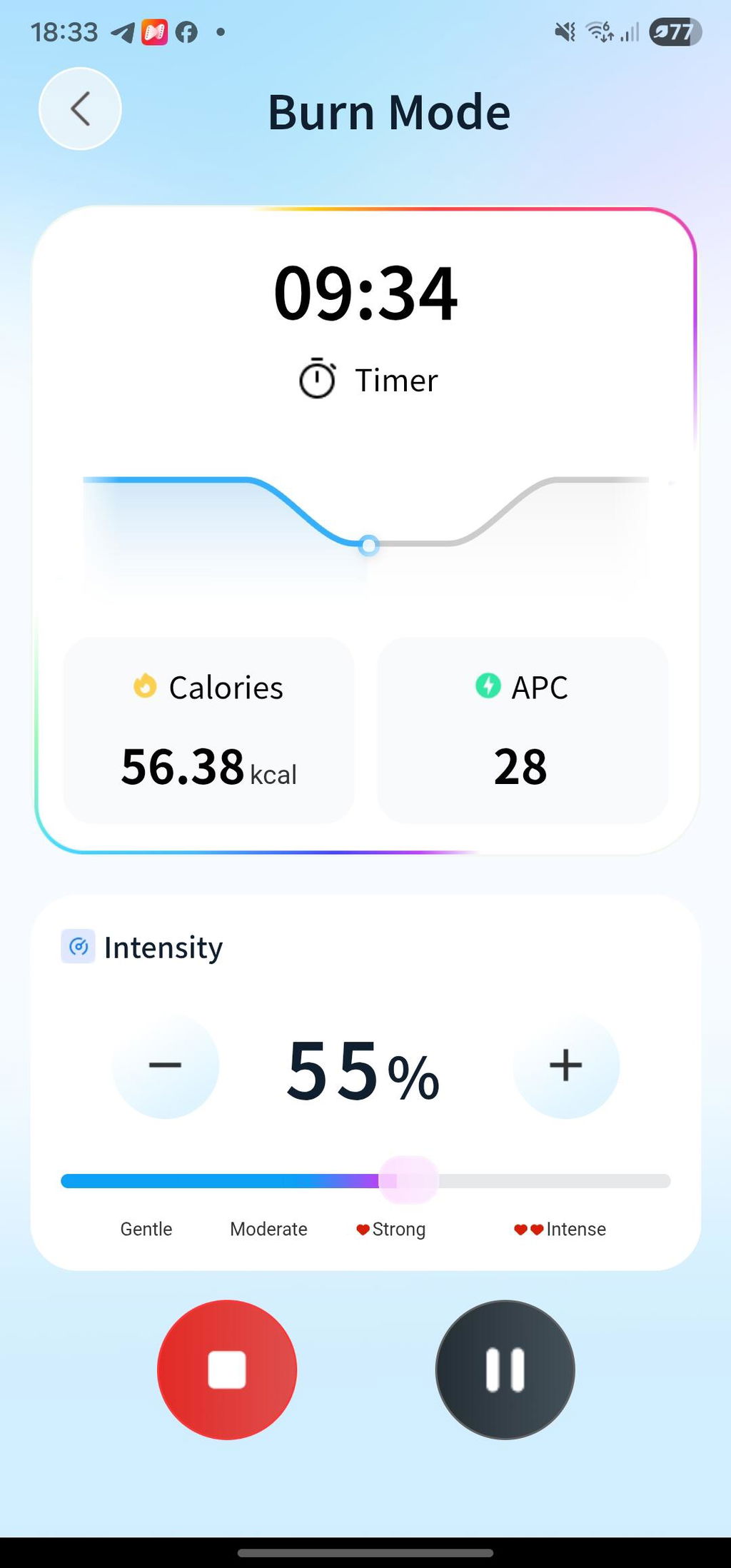
The app should organize stimulation settings into clear programs with visible intensity controls, session records, and direct access to pause or stop the session.
Programs With Defined Purposes
Each program should state its intended use, such as activation, strength work, endurance, core training, or lower-intensity post-workout comfort. Instructions should explain session length, target muscles, stimulation rhythm, expected sensation, and suitable movements.
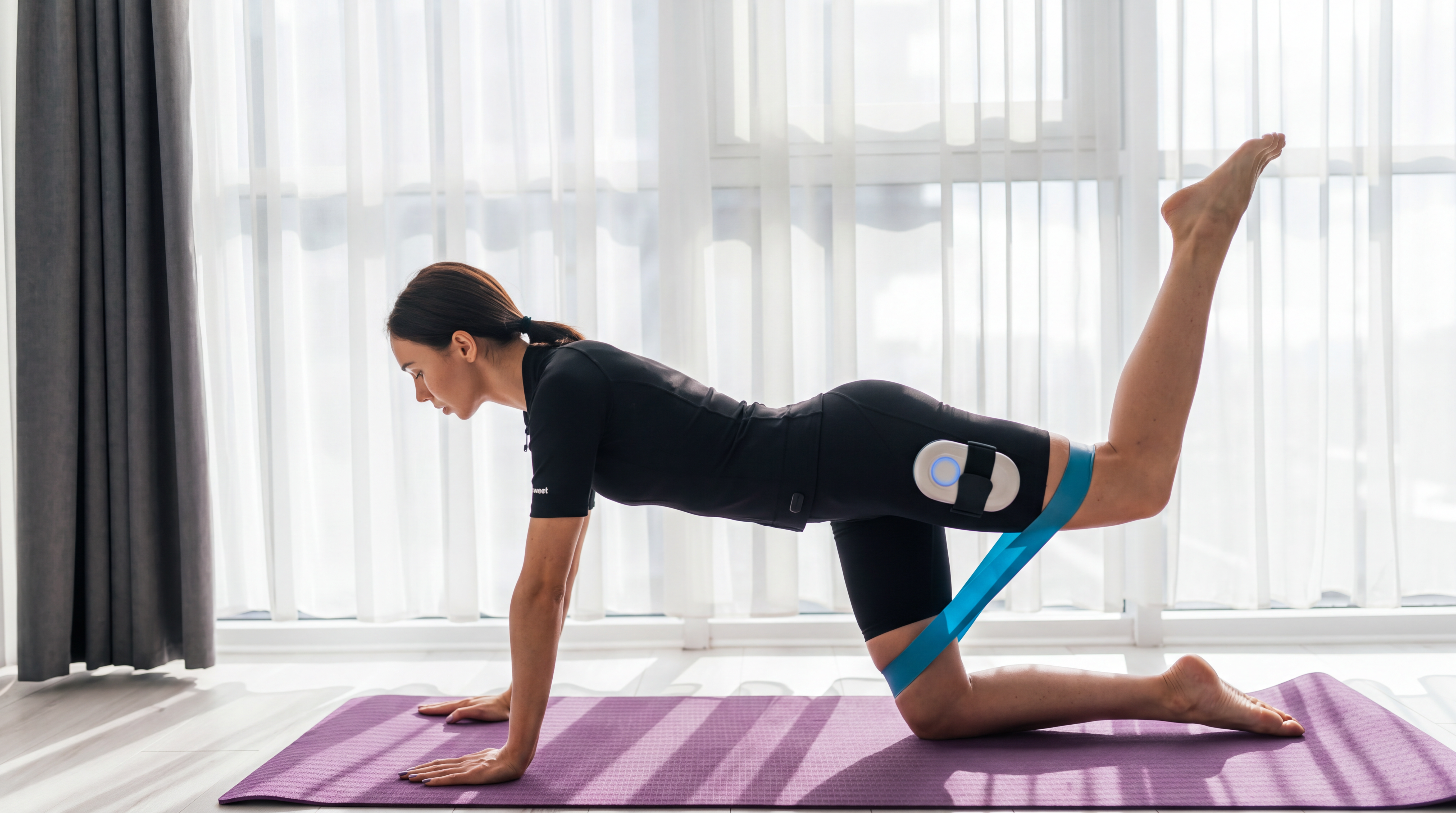
A guided strength session may combine stimulation with squats, glute bridges, lunges, standing presses, or core bracing. A lighter program may pair lower intensity with mobility work after a demanding day.
This helps users follow the contraction cycle and avoid choosing a mode based only on its name.
Session Data That Supports a Routine
Useful records may include the date, duration, completed program, and selected intensity. Electrode-contact alerts may also appear during use.
These details make the next session easier to repeat. Session history may show that a short morning routine fits better than an evening session, or that the core needs a lower setting than the legs.
Controls That Remain Available
Smart muscle stimulators should keep pause, stop, and intensity controls visible throughout the session. The app should also explain how the system responds to weak electrode contact, low battery power, and a lost Bluetooth connection.
A normal session may create tingling and controlled contractions. The muscle can tighten and release steadily, but the sensation should remain manageable. Sharp pain, burning, lasting numbness, or sudden discomfort is a reason to stop and check fit, skin contact, and intensity.

Where Smart EMS Helps Home Users Stay Consistent
Smart muscle stimulators can reduce barriers such as travel time, complicated setup, crowded fitness spaces, and limited energy after work. Their main home-use benefit is the ability to return to a familiar program with fewer preparation steps.
When There Is No Time for the Gym
Travel, changing clothes, and waiting for equipment can take longer than the workout. A home session removes much of that preparation.
A person with a short lunch break or busy evening can select a saved program and begin without arranging machines or placing multiple pads. This makes structured activation easier to fit into a crowded schedule.
When the Gym Feels Uncomfortable
New exercisers may feel unsure in a busy training area. A guided home program0 them privacy to practice basic movements and learn how different stimulation levels feel.
Clear instructions should identify the target muscles, suitable movements, and signs that the intensity needs to be reduced.
After Long Hours of Sitting
Desk work can leave the glutes, core, and upper back underused. A brief EMS session paired with simple movement offers a structured way to contract these areas.
A remote worker might use an activation program before a walk, while an office worker may complete one after arriving home. Walking, mobility work, and position changes remain useful alongside guided EMS activation.
On Lower-Energy or Recovery Days
A lower-intensity program can suit users who want gentle muscle activity after exercise or a demanding workday. Saved settings make a short session easier to repeat.
A recovery-focused session can support light activation, comfort, and routine consistency. Pain, swelling, or a recent injury requires professional guidance before use.
By saving previous settings and completed programs, smart muscle stimulators reduce the decisions that often delay a workout.
4 Key Safety, Privacy, and Comfort Checks Before Buying
The main buying risks involve unsuitable health conditions, poor electrode contact, incorrect sizing, and software limits. These factors directly affect comfort and daily use.
1. Understand FDA Registered Claims
Some EMS products sold in the United States are described as FDA-registered. The manufacturer name and registration information should match the product label and official sales materials.
FDA registered is different from FDA approved. Registration supports traceability, but it does not confirm a specific result or guarantee suitability. The claim has greater value when the manufacturer, labeling, contraindications, and support details are easy to verify.
2. Review Health Restrictions
Electrical muscle stimulation may be unsuitable for people with pacemakers or other implanted electronic devices. Pregnancy, epilepsy, significant heart or circulation conditions, recent surgery, open wounds, reduced sensation, and unexplained pain also require professional guidance.
EMS should be used on healthy skin according to the supplied instructions. Fitness-focused programs support muscle activation and training. They should not be used as self-directed care for an injury or medical condition.
3. Check Fit and Electrode Contact
0 need close, even contact. Loose fabric may cause weak or inconsistent stimulation, while an overly tight garment can restrict movement.
Actual body mea surements are more useful than a usual clothing size. Buyers should review the size chart and electrode map.
Uneven stimulation can result from dry contact areas, loose fabric, incorrect placement, or different zone settings. Checking these factors may resolve the issue before hardware support is needed.
4. Examine App Privacy and Access
App availability determines how much of a connected smart muscle stimulator remains usable. The software should support the user’s phone, operating system, and region. Core controls should not become unexpectedly unavailable behind a paid plan.
A clear privacy policy should explain where session history and intensity settings are stored, how long the information is kept, and how users can delete it. The manual should also explain what happens when Bluetooth disconnects or the app closes during a session.

Choose Smart EMS Features That Make Training Easier to Follow
The right system should match your routine, comfort level, and training goals. Prioritize clear programs, gradual intensity control, accurate sizing, reliable electrode contact, and an app that works in your region. Privacy terms, subscription limits, safety information, and FDA-registered claims should also be easy to verify. The best smart muscle stimulators reduce setup, keep each session manageable, and support a familiar routine without unnecessary complexity.
FAQs about Smart Muscle Stimulators
Q1. How Often Should Beginners Use Smart Muscle Stimulators?
Most beginners should begin with one whole-body EMS session per week, and Sweetmyo full-body EMS suit is the best choice. This gives the muscles time to adapt to the unfamiliar training load. Session frequency may increase gradually after several weeks when soreness remains manageable and recovery is complete.
Q2. Do Smart EMS Suits Need Water or Conductive Gel?
It depends on the electrode design. Some suits operate through dry conductive materials, while others require dampened contact areas or a conductive medium. Follow the product instructions because adding water or gel to an incompatible system may damage its components.
Q3. Is Muscle Soreness Normal After an EMS Session?
Yes, mild muscle soreness can occur, particularly after the first few sessions or an increase in intensity. Reduce the next session’s load and allow additional recovery if soreness continues. Severe pain, swelling, weakness, or dark urine requires prompt medical attention.
Q4. Can Multiple People Share the Same Smart EMS Suit?
Usually, each person should use a correctly sized garment. Sharing may create poor electrode alignment, hygiene concerns, and unsuitable saved settings. When a system supports multiple profiles, each user should still have a garment that matches their body measurements.
Q5. How Should You Clean a Smart EMS Suit?
Remove the controller and other electronic parts before cleaning. Use the washing method, detergent, and water temperature stated on the care label. Air-dry the garment completely, and never reconnect the electronics while the fabric or electrode areas remain damp.


Leave a comment
This site is protected by hCaptcha and the hCaptcha Privacy Policy and Terms of Service apply.