

What does EMS training do? It uses controlled electrical impulses to stimulate muscles and create rhythmic contractions. During a first session, this may feel like tingling, pulsing, vibration, or muscles tightening and relaxing in a steady pattern. Many first-time users wonder if the sensation should feel painful or intense. A well-adjusted EMS training session should feel noticeable and controlled, not sharp or burning. The first goal is to find a comfortable intensity and understand how your body responds.
The First Sensation Usually Feels Unusual, Not Necessarily Intense
Use the first few minutes to check fit, skin contact, and intensity. Your body is responding to a type of muscle stimulation that feels different from lifting weights, stretching, or cardio. The muscles may contract even though you are not using heavy external resistance.
Most beginners describe the first sensation as:
- Pulsing
- Light buzzing
- Gentle vibration
- Rhythmic tightening
- Muscle tightening and release
- A clear working feeling in specific muscle groups
The sensation can vary by body area. Larger muscle groups, such as the thighs and glutes, may feel a deeper contraction. Smaller or more sensitive areas, such as the arms or abdomen, may feel stronger at a lower setting. That difference is common because muscle size, electrode contact, skin sensitivity, hydration, and body position all affect how stimulation feels.
A good first setting should be easy to notice without making you tense. You should be able to breathe normally, speak clearly, and follow simple movements. If you hold your breath, tighten your jaw, or feel distracted by the sensation, the intensity is probably too high for a first session.

Why the Feeling Changes as You Adjust the Intensity
The feeling changes because the electrical impulses become more noticeable as intensity increases. At a low setting, the sensation may stay close to the skin. You may feel light tingling or a mild pulsing feeling under the electrodes. At a moderate setting, the muscle contraction becomes easier to identify. The target area may tighten, release, and feel actively engaged.
During EMS training, each muscle group may need its own intensity level. Your legs may handle a stronger setting than your arms. Your abdomen may feel sensitive one day and more comfortable the next. It means your body is responding to contact quality, fatigue level, skin moisture, and muscle sensitivity.
Several factors can change how the same setting feels:
- Electrode Contact: Better contact usually creates a smoother, clearer sensation.
- Skin Moisture: Very dry skin can make stimulation feel uneven.
- Muscle Size: Larger muscles often tolerate stronger contractions.
- Fatigue: Tired muscles may feel stimulation sooner.
- Body Position: A stretched or contracted muscle can respond differently.
- Session Length: Some areas may become more sensitive as the session continues.
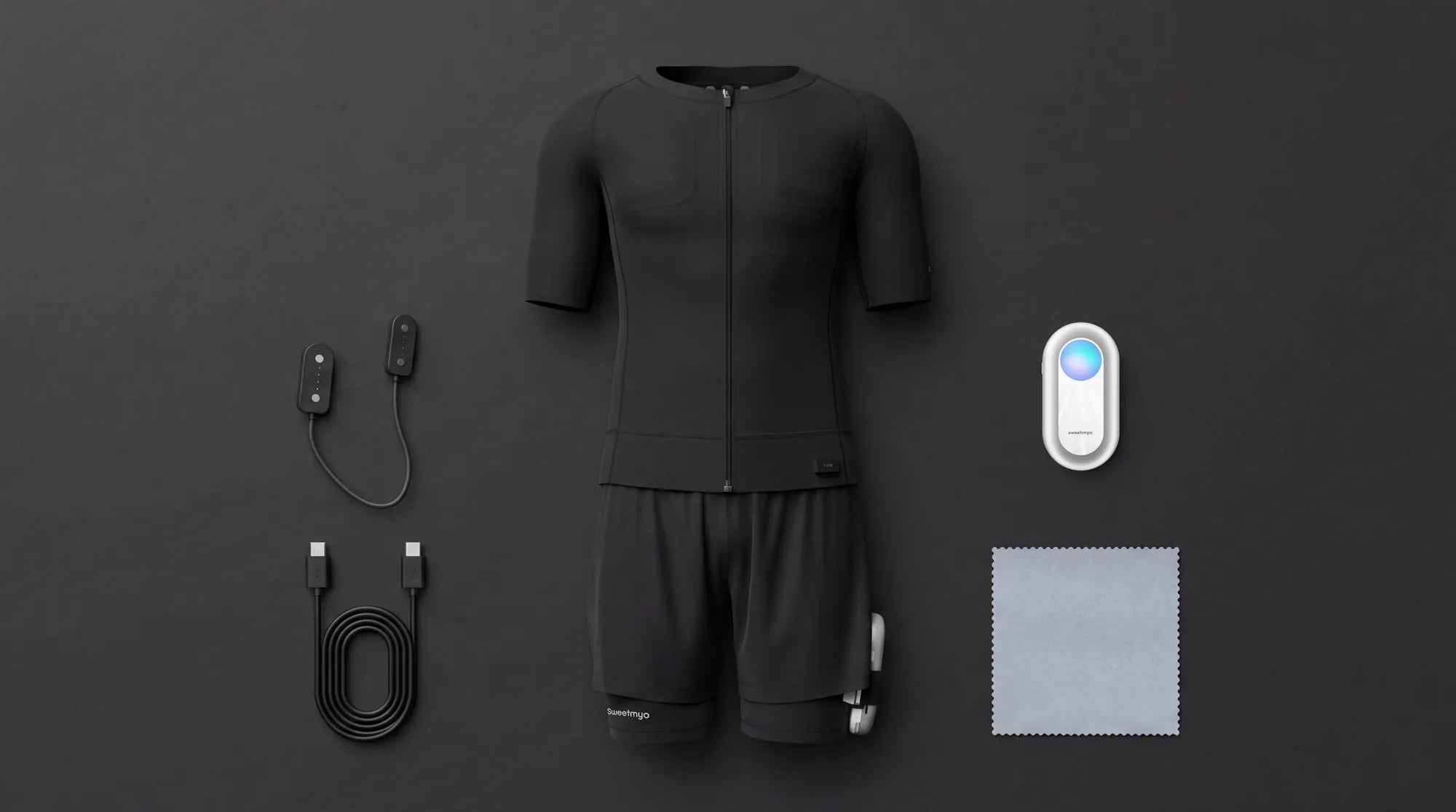
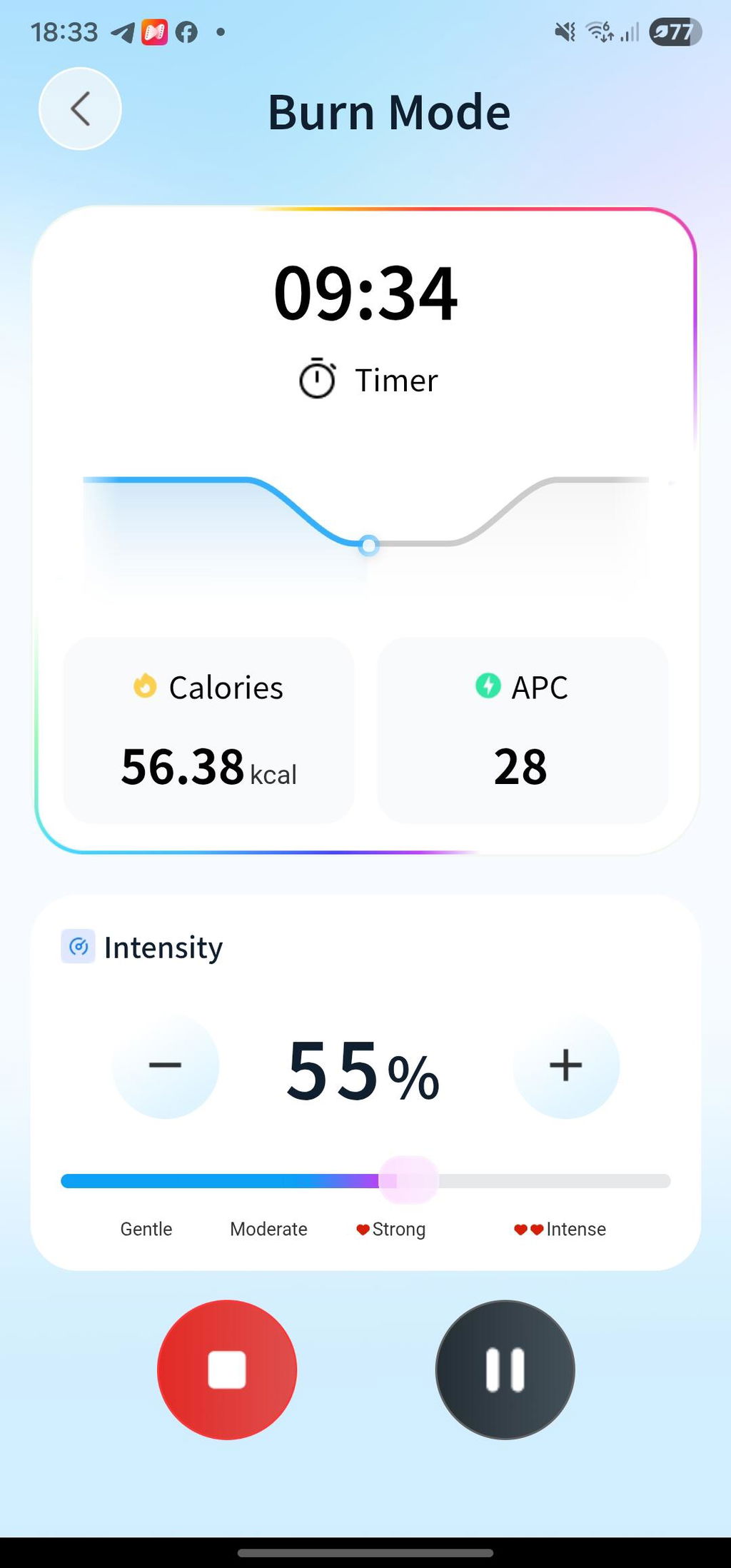
Modern EMS systems often allow intensity adjustment by body zone. For example, SweetMyo uses app-based controls that let users adjust intensity by muscle zone, such as the abs, arms, thighs, or glutes. This is helpful for beginners because comfort rarely feels identical across the whole body.
What a Normal EMS Training Session Should Feel Like
During a normal EMS training session, the target muscles should tighten and relax in a clear pattern. You may notice the contraction most when the impulse is active, then feel the muscle ease when it pauses. If the session includes simple movements, those movements may feel harder than usual because the stimulated muscles are already engaged.
| Part of the Session | What You May Feel | What It Usually Means |
|---|---|---|
| First few minutes | Tingling, pulsing, light contractions | Your body is adapting to the stimulation |
| Middle of the session | Clear tightening and release | Muscles are responding to the selected intensity |
| During movement | Stronger awareness of the working muscles | Stimulation is adding contraction while you move |
| Final minutes | Mild fatigue or heaviness | The target areas have been activated |
| After the session | Light soreness or tiredness | Similar to a mild or moderate workout response |
Your breathing should stay steady throughout the session. You should also be able to keep good posture and move with control. The feeling may be unfamiliar, but it should not make you lose coordination or feel overwhelmed.
Different session types can feel different. A strength-focused EMS session may create more noticeable contractions. A recovery or relaxation setting may feel lighter and steadier. For beginners, lower settings and simple movements are usually easier to manage.
If one side of your body feels much stronger than the other, pause and check fit, fabric placement, or skin contact. Uneven sensation can happen when electrodes are not sitting evenly or one area is more sensitive.

Some Reactions Are Typical, Others Mean You Should Stop
The key is knowing which reactions are normal and which ones mean you should reduce intensity or end the session. Good EMS training should stay within a comfortable range, especially for beginners.
Typical reactions may include:
- Mild muscle fatigue
- Light soreness later in the day or the next day
- Temporary warmth in the trained area
- Slight skin redness that fades after the session
- A stronger awareness of certain muscles
- A feeling that some muscles worked harder than expected
These reactions are usually short term. They can happen because your muscles are contracting in a new pattern. Drinking water, keeping the first few sessions moderate, and allowing recovery time can help reduce excessive soreness.
Stop the session or lower the intensity if you notice:
- Sharp pain
- Burning sensation
- Strong skin irritation
- Dizziness
- Chest discomfort
- Numbness
- Severe cramping
- Shortness of breath
- Pain that feels unusual or does not ease after the session
- Unusual swelling or extreme soreness
People with implanted electronic devices, serious heart conditions, a history of seizures, pregnancy, or active skin wounds should speak with a qualified professional before using electrical muscle stimulation. The same applies to anyone with a condition that affects nerve sensitivity, circulation, or muscle function.

Knowing What to Expect Makes the First Session Much Easier
For a first EMS training session, focus on learning the sensation and finding your comfortable range. Tingling, pulsing, vibration, and muscle tightening are common. Pain, burning, dizziness, chest discomfort, or loss of control are signs to pause or stop.
Before the Session
- Make sure the suit or electrodes fit correctly.
- Follow the recommended contact method.
- Choose a beginner-friendly program.
- Avoid training to exhaustion.
During the Session
- Raise intensity slowly.
- Notice how each muscle group feels.
- Keep your breathing steady.
- Lower intensity if your body tenses up.
- Stop if you feel pain, burning, dizziness, or chest discomfort.
After the Session
- Notice which areas feel worked.
- Drink water.
- Allow enough recovery time.
For most beginners, EMS training feels strange at first and easier to manage once the contraction rhythm becomes familiar.
FAQs
Q1. Can You Do EMS Training Every Day?
No. Most beginners should avoid daily EMS training because stimulated muscles still need recovery time. For first-time users, one or two sessions per week is usually more sensible than frequent sessions. Recovery days help muscles adapt and reduce excessive fatigue.
Q2. What Should You Wear for EMS Training?
Wear close-fitting, breathable clothing that allows good electrode or suit contact. Avoid thick layers, heavy seams, lotions, or oily skin products before the session because they can interfere with contact quality. For EMS suits, follow the device’s specific clothing and moisture instructions.
Q3. Should You Exercise While Using EMS?
Yes, if the program is designed for active training. Simple movements such as squats, lunges, or core holds can help you coordinate the muscle contractions with real movement patterns. Keep the exercises controlled and low-impact during your first few sessions.
Q4. Can You Eat Before EMS Training?
Yes, but avoid a heavy meal right before the session. A light meal or snack one to two hours beforehand is usually easier on the stomach. Training while overly full may feel uncomfortable, especially during core or full-body EMS programs.
Q5. How Long Does It Take to Get Used to EMS Training?
Most users feel more comfortable after a few sessions, but full adjustment can take several weeks. The goal is to build tolerance gradually, learn your preferred intensity range, and understand how different muscle zones respond over time.


Leave a comment
This site is protected by hCaptcha and the hCaptcha Privacy Policy and Terms of Service apply.