

EMS training can support muscle strength, muscle mass, and consistent short workouts, especially for adults who are not already following a demanding resistance program. The evidence is less convincing for stand-alone fat loss, faster recovery, or rapid visible transformation. Results also depend on the program, intensity, fit, movement, and recovery between sessions. Understanding those limits makes it easier to judge whether EMS fits your goals and to track changes that actually matter.
EMS Training Benefits at a Glance
- Best-supported benefits: improved muscle strength and support for muscle mass
- Practical benefit: short, structured sessions that may be easier to fit into a busy week
- Possible advantage: meaningful muscle loading without heavy external weights
- Less certain claims: fat loss, calorie burn, faster recovery, and posture changes
- Most important condition: gradual progression, correct fit, adequate recovery, and consistent use
EMS is best viewed as a muscle-conditioning method. It can complement a broader fitness routine, but it does not reproduce every benefit of resistance training, aerobic exercise, walking, or everyday movement.

How Does EMS Training Work?
EMS stands for electrical muscle stimulation. Electrodes deliver controlled impulses through the skin to motor nerves, causing the nearby muscles to contract. A full-body EMS suit places electrode zones over several major muscle groups so they can be stimulated during the same session.
The sensation is usually a firm pulsing or tightening. During active EMS training, the user also performs simple movements or holds positions while the impulses add to the muscular demand. This distinction matters because much of the whole-body EMS research combines stimulation with voluntary movement. The evidence should not be interpreted as proof that lying still produces the same result as an active session.
Which EMS Training Benefits Have the Strongest Evidence?
Improved Muscle Strength
For non-athletic adults, regular whole-body EMS can improve leg and trunk extension strength. Strength is therefore one of the better-supported EMS training benefits.
That does not mean EMS always outperforms conventional strength training. Results vary with age, health, training frequency, and program length. A more accurate takeaway is that whole-body EMS can provide a real strength stimulus, particularly for less active or deconditioned adults.
Support for Muscle Mass
The same analysis found a positive overall effect on muscle mass, although the size of the change varied considerably among studies. Results may depend on starting fitness, stimulation intensity, nutrition, and whether the sessions include movement.
For an already well-trained person, EMS is more likely to serve as an additional training tool than a replacement for progressive resistance work. For a beginner, it may offer a structured way to introduce muscle-loading sessions without building an entire gym routine first.
Time-Efficient, Full-Body Sessions
Many whole-body EMS protocols use sessions of around 20 minutes. This creates a genuine scheduling advantage: several major muscle groups can be stimulated in one short session, without a gym commute or a room full of equipment.
A 20-minute EMS session should still be described as a 20-minute EMS session. Claims that it automatically equals several hours of conventional exercise are difficult to support because the two formats create different cardiovascular, skeletal, coordination, and skill demands.
Muscle Loading With Less External Weight
EMS can make low-load movements feel more demanding because the stimulation contributes to each contraction. This may appeal to people who do not want to lift heavy weights or who prefer controlled home exercises.
Lower external weight does not make every movement suitable for every person. Joint pain, an injury, or a medical condition still requires appropriate professional guidance. Consumer EMS training should not be used as self-directed rehabilitation.

Which Popular EMS Claims Need More Caution?
Stand-Alone Fat Loss
EMS causes muscle contractions and uses energy, but this does not establish it as a stand-alone weight-loss method. In the 2021 meta-analysis, whole-body EMS improved strength and muscle mass, while the overall change in total body fat was not statistically significant.
Body composition can still change when EMS is combined with regular activity, suitable nutrition, sleep, and a sustainable calorie balance. The important distinction is that EMS may support a broader plan; it does not selectively burn belly fat or replace that plan.
Faster Recovery and Less Soreness
Recovery modes often use gentler stimulation and may feel relaxing after training. However, electrical stimulation has not shown reliable benefits for preventing delayed-onset muscle soreness or improving short-term muscle recovery. The available evidence is very low to low quality and varies by protocol.
Users can still choose a low-intensity mode for comfort if the device instructions allow it, but subjective relief and faster physiological recovery are not the same claim.
Automatic Posture Correction or Pain Treatment
Stronger trunk muscles may contribute to better movement and stability, and studies in selected chronic low-back-pain populations have reported useful outcomes. Those results do not prove that EMS automatically corrects posture or treats an unexplained source of pain.
Posture depends on movement habits, mobility, strength, workstation setup, and individual anatomy. Persistent or worsening pain should be assessed by a qualified health professional rather than managed by increasing EMS intensity.
How Long Does EMS Training Take to Work?
There is no universal week when EMS results appear. The studies included in the strength and body-composition meta-analysis lasted from 6 to 54 weeks and used different schedules and populations. That range does not support a promise that everyone will see meaningful results in six or eight weeks.
[Embedded spreadsheet — study duration and schedule data table]
Use repeatable measures instead of relying only on the mirror. You might track the same bodyweight movement, a simple strength test, session intensity, recovery, or fit of clothing at consistent intervals. Change one variable at a time so you can tell whether the program is progressing.
How to Use EMS Consistently Without Overdoing It
Increasing intensity quickly is not a shortcut to better results. Whole-body stimulation can create substantial muscular stress even when the session is short.
During the first 8 to 10 weeks of whole-body EMS, beginners should avoid high intensity and limit training to one 20-minute session per week. After that adaptation period, EMS training frequency should increase only when soreness and fatigue resolve fully between sessions.
For a safer, more repeatable routine:
- Read the device instructions and full contraindication list before the first session.
- Begin with low intensity and stop if the sensation becomes sharp or painful.
- Make sure the garment fits correctly and each electrode zone has consistent skin contact.
- Leave enough time for soreness and fatigue to resolve before another demanding session.
- Keep walking, aerobic activity, mobility, or conventional strength work in your wider routine.
- Do not use EMS if you have a pacemaker or another implanted electronic device. Pregnancy and certain heart, circulation, or medical conditions also require avoidance or medical clearance according to the device instructions.
Improper use can lead to shocks, burns, bruising, skin irritation, pain, or interference with implanted devices. Stop the session if you feel unwell. Severe or persistent pain, marked swelling or weakness, or dark urine after intense stimulation warrants prompt medical attention.

Decide Whether EMS Fits Your Training Routine
EMS makes the most sense when its specific strengths solve a real problem: you want a short, structured muscle-conditioning session, prefer to train at home, or find it difficult to maintain a longer gym routine. It is a weaker fit when the expectation is passive weight loss, complete exercise replacement, or guaranteed results on a fixed timeline.
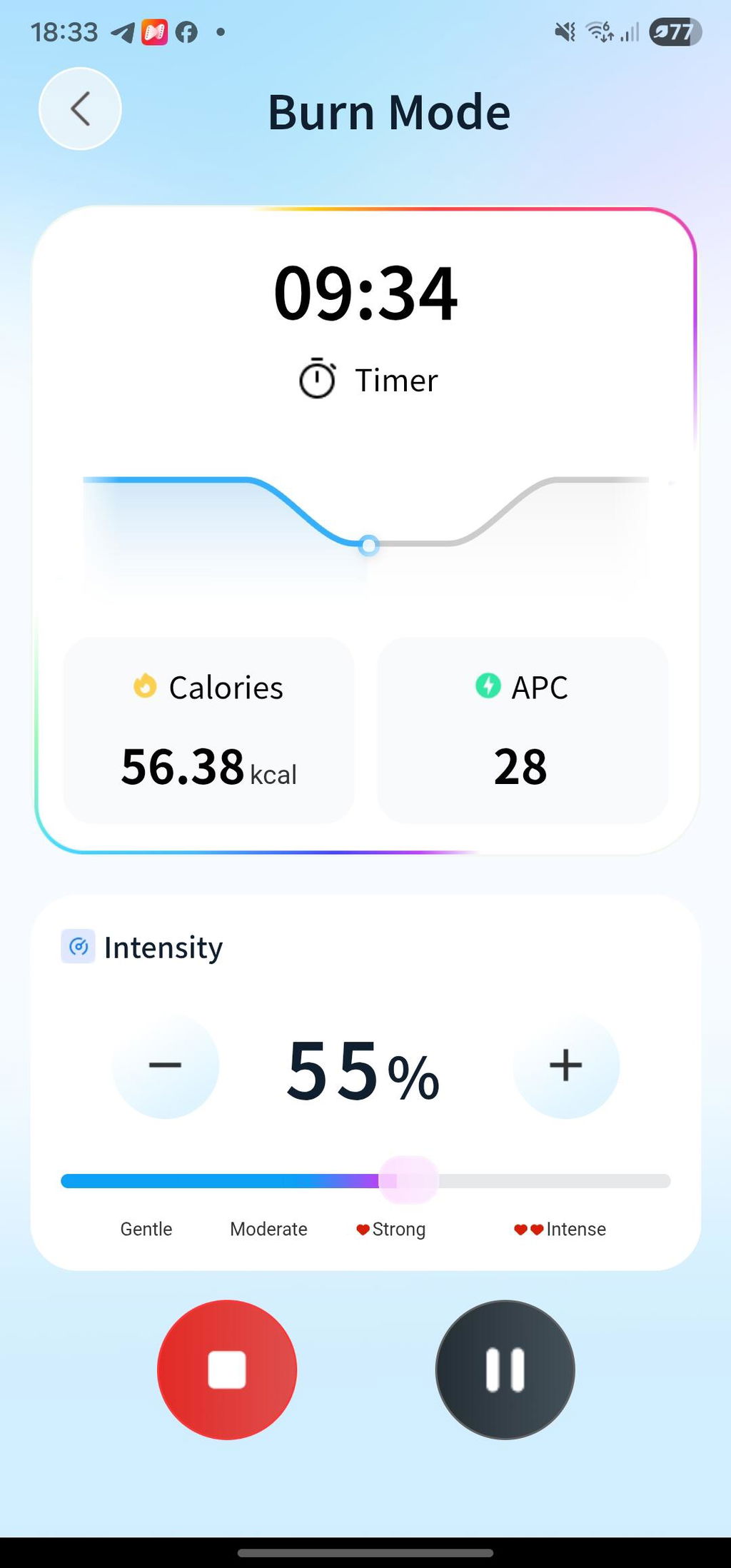
Our AI Full-Body EMS Suit combines built-in electrode zones, app-adjustable intensity, and guided 20-minute programs. Use those features to create a controlled, repeatable routine, then judge progress by strength, consistency, and how well you recover instead of relying on calorie estimates or a fixed transformation timeline.
FAQs about EMS Training Benefits
Q1. Can EMS Training Tighten Loose Skin?
EMS is not a proven treatment for tightening loose skin. Muscle development may change how an area looks, but that is different from altering skin laxity. Expectations should depend on the underlying cause, age, weight changes, and skin condition rather than EMS use alone.
Q2. Is EMS the Same as TENS?
No. EMS is intended to create muscle contractions for conditioning or muscle-related applications. TENS primarily targets sensory nerves and is generally used for pain relief. A device's intended use, electrode placement, and instructions matter, so the terms should not be treated as interchangeable.
Q3. Why Does One Area of an EMS Suit Feel Weaker Than Another?
Uneven sensation commonly relates to garment fit, electrode alignment, or inconsistent skin contact. Recheck the suit position and follow its preparation instructions before raising intensity. If one area remains painful, unusually weak, or inconsistent, stop and consult the product support team.
Q4. Can You Combine EMS With Traditional Strength Training?
Yes, EMS can complement conventional strength training when the total workload remains manageable. Avoid stacking unfamiliar or high-intensity EMS onto a demanding session for the same muscles. Beginners should establish their response first, then adjust the schedule around soreness, performance, and adequate recovery.
Q5. Can You Use Fitness EMS to Rehabilitate an Injury?
Not without professional guidance. Consumer fitness EMS is not a substitute for diagnosis or physical therapy. If an injury, surgery, unexplained weakness, or persistent pain affects a muscle group, ask a licensed clinician whether electrical stimulation is appropriate and which protocol should be used.



Leave a comment
This site is protected by hCaptcha and the hCaptcha Privacy Policy and Terms of Service apply.