
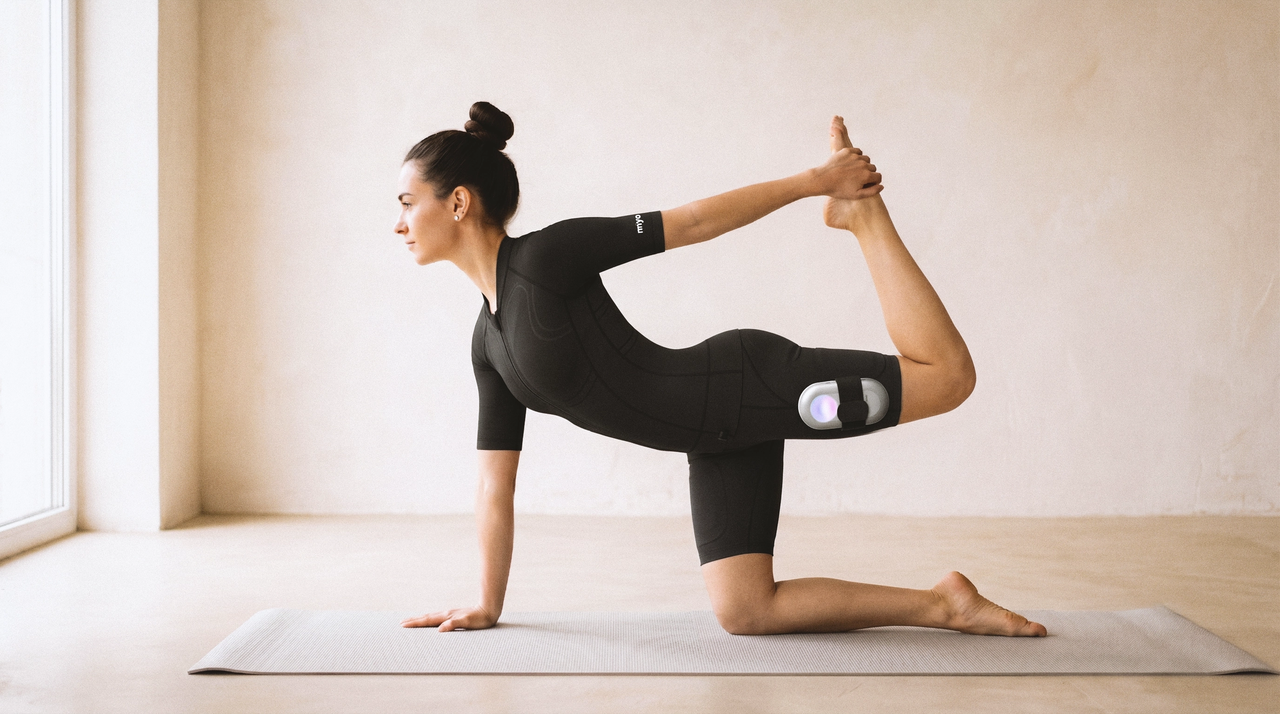
Yes. EMS for glutes can help you feel and activate your glute muscles, especially if your quads, hamstrings, or lower back take over during lower-body workouts. It does not create noticeable glute growth by itself. EMS training works best as a support tool for muscle awareness, warm-ups, light stimulation, and recovery-style sessions. For visible shape changes, your routine still needs resistance training, progressive overload, adequate nutrition, and consistent recovery.
EMS Can Improve Glute Activation, but That Is Not the Same as Growth
A lot of people try glute exercises and never feel their glutes doing the work. Squats feel like quads. Hip thrusts feel like lower back pressure. Lunges feel unstable. In that situation, EMS can be useful because it gives your brain and body a clearer signal from the target muscle.
What EMS Actually Does
In practical terms, EMS gives your glutes a clearer signal. If your lower-body workouts always feel like quads, hamstrings, or lower back, that signal can help you notice what a glute contraction should feel like.
The main benefit is activation. The stimulation can help you feel the muscle contract, which may make it easier to connect with your glutes during regular exercises. This can be helpful before a workout, during a light activation session, or on a day when you want low-impact muscle stimulation.
For EMS for the glutes, the immediate result is usually a stronger sense of contraction. That does not automatically mean the muscle is getting larger.

Activation and Growth Are Different Outcomes
Glute activation means the muscle is firing. Glute growth means the muscle has adapted after enough mechanical tension, volume, recovery, and nutrition. These are related, but they are separate outcomes.
An EMS glutes trainer may help you feel the glutes better. A glutes muscle stimulator may also help you practice control if you struggle to engage the area. Still, the strongest growth signal usually comes from exercises that load the glutes through hip extension, such as hip thrusts, squats, Romanian deadlifts, step-ups, split squats, and cable kickbacks.
If your goal is better muscle awareness, EMS can help. If your goal is a larger or rounder glute shape, stimulation alone will rarely be enough.
Why EMS Alone Rarely Changes Your Glutes the Way You Expect
EMS can feel productive because the contractions are obvious, and your glutes may feel tired afterward. That sensation can be useful, especially if you struggle to feel the muscle during regular exercises. But it should not be confused with a complete glute-building plan.
Glute Growth Needs Progressive Challenge
Your glutes respond when they are challenged repeatedly over time. The challenge can come from heavier weight, more controlled reps, deeper range of motion, better exercise execution, or more weekly training volume.
EMS training can create contractions, but many sessions do not load the hip joint through a full movement pattern. The glutes are large muscles that extend, rotate, and stabilize the hips. They usually grow best when those jobs are trained under resistance.
EMS alone often misses several key growth factors:
- Full hip extension against load
- A stretched position under control
- Progressive resistance over weeks
- Skill practice in real exercises
- Enough total hard sets per week
This is why someone may feel strong contractions during an EMS session and still see little visual change after a few weeks.
Soreness Is Not a Reliable Result Marker
A stronger pulse does not always mean better progress. Soreness also has limits as a feedback tool. Some soreness can happen after a new stimulus, but extreme soreness can interfere with your next workout.
Better signs of progress include:
- You feel your glutes during key lifts with less effort
- Your hip thrust, squat, or lunge performance improves
- You can control your pelvis and lower back better
- You recover well between sessions
- Your measurements, photos, or strength logs improve over time
If your EMS routine makes you sore but your training numbers stay flat, the plan needs adjustment.
Better Glute Engagement Usually Comes From Better Training Context
For many users, EMS for glutes becomes most useful when it is paired with better exercise choices and cleaner movement. Poor glute engagement is often a training setup issue. The body may use the quads, hamstrings, or lower back because the exercise angle, load, range, or tempo is not helping the glutes do their job.
Choose Exercises That Match Your Goal
Some glute exercises are better for growth. Others are better for feeling the muscles. A smart plan usually includes both.
| Goal | Useful Choices | Why They Help |
|---|---|---|
| Build size and strength | Hip thrusts, squats, Romanian deadlifts, leg press | They create higher tension and allow progression |
| Improve glute awareness | Glute bridges, cable kickbacks, frog pumps | They are easier to feel and control |
| Train stability | Step-ups, split squats, single-leg hip thrusts | They make the glutes stabilize the hip |
| Warm up before lifting | Bodyweight bridges, band walks, light stimulation | They prepare the area without heavy fatigue |
EMS training fits best as part of the warm-up, activation, or support category for most people. It can help you feel the muscle before your main lifts, but the main lifts still do the heavy work for growth.
Adjust Your Form Before Blaming Your Glutes
Small technique changes can improve glute engagement quickly.
For hip thrusts, keep your ribs down, control the pelvis, and finish with the glutes rather than arching the lower back. For Romanian deadlifts, push the hips back, keep the weight close, and move through a range you can control. For lunges and split squats, a slight forward torso angle often helps the glutes contribute more.
If you use an EMS glutes trainer while your form still shifts stress away from the glutes, results may stay limited. The device can help you feel a contraction. Your movement still decides how much useful training stress the glutes receive.
Use EMS Around Training, Not Over It
A practical approach is to use light stimulation before your main glute workout, then train with weights or bodyweight exercises. Some people also prefer lower-intensity stimulation after training for gentle muscle activity.
Avoid placing a hard EMS session right before heavy lower-body lifting if it leaves your glutes tired. The goal is to improve the workout, not reduce your performance.

Use EMS for Glutes With the Right Goal in Mind
The best results from EMS for glutes come from matching the session to a clear goal. If you want better activation, use it before training at a light to moderate intensity. If you want low-impact stimulation, keep the session easier and avoid treating it like another hard workout. If you want glute growth, use EMS as support for a real strength plan, not as the main stimulus.
How to Use EMS More Effectively
A simple weekly setup may look like this:
- Use light stimulation for 5 to 10 minutes before glute training.
- Follow it with hip thrusts, squats, lunges, or deadlift variations.
- Keep intensity strong enough to feel, but easy enough to recover from.
- Limit hard EMS sessions if they affect your next workout.
- Track strength, form, and body changes over several weeks.
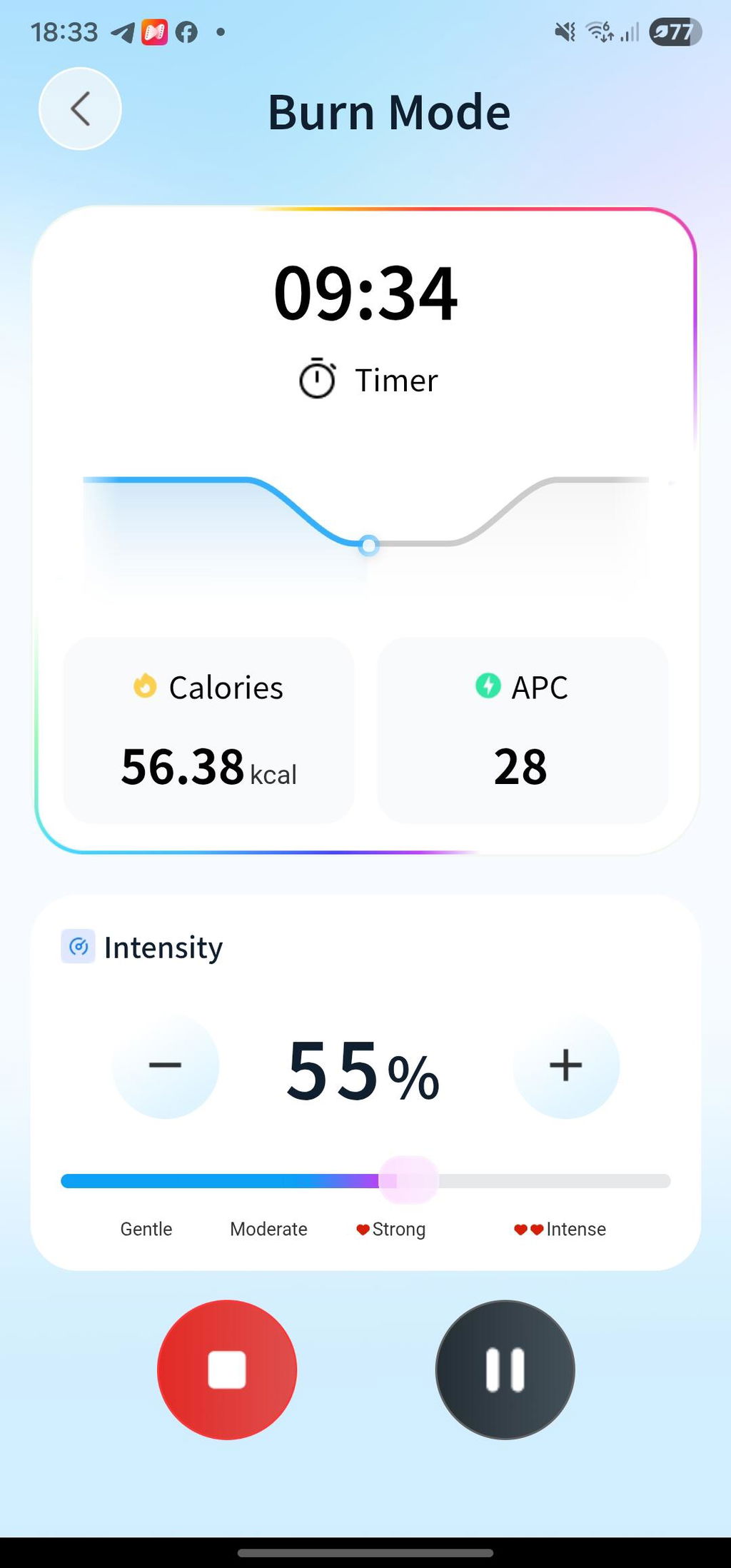
If you use a wearable EMS system such as SweetMyo, treat the guided sessions as part of your routine rather than a replacement for resistance work.
Use EMS on the days when it helps you feel and control your glutes better. Lower the intensity or skip it when it makes your next lower-body workout worse. Think of EMS as a way to find your glutes, not a shortcut that replaces training them.
FAQs
Q1. Can EMS Grow Your Glutes?
EMS may support glute growth by improving activation and helping you feel the muscle during training. It does not usually create visible glute growth on its own. For size and shape changes, you still need progressive resistance training, enough training volume, and recovery.
Q2. How Often Should You Use EMS for Glutes?
Two to three times per week can be reasonable for many users, especially if the sessions are light to moderate. If your glutes stay sore for days or your lower-body workouts feel weaker, reduce the intensity or frequency.
Q3. Should EMS Go Before or After Glute Workouts?
Use lighter stimulation before training if your goal is activation. This may help you feel your glutes more clearly during hip thrusts, squats, lunges, or step-ups. Use lower-intensity stimulation after training if your goal is gentle muscle activity or recovery support.
Q4. Is a Glutes Muscle Stimulator Safe?
Many healthy adults can use a glutes muscle stimulator safely when they follow the device instructions and keep intensity controlled. People with implanted electronic devices, seizure history, certain heart conditions, pregnancy, active injuries, or unusual pain should get medical guidance before use, and an EMS safety and side effects guide can help you review common precautions.
Q5. Is an EMS Glutes Trainer the Same as Emsculpt?
No. An EMS glutes trainer is usually an at-home or wearable device that uses electrical impulses to stimulate muscle contractions. Emsculpt is an in-office body-contouring treatment that uses different technology and a much stronger treatment setting. They should not be treated as the same thing.

コメントを書く
このサイトはhCaptchaによって保護されており、hCaptchaプライバシーポリシーおよび利用規約が適用されます。