
A full-body EMS suit for home use can cost about $500 to $3,000, based on current public prices reviewed in 2026. The purchase price is only the starting point. The controller, app access, required accessories, replacement parts, warranty, and realistic frequency of use all affect what the system costs over time.
How Much Does a Full-Body EMS Suit Cost?
Among the branded home systems reviewed, entry-level full-body packages start around $500, while some premium systems approach $3,000 before ongoing membership fees.
|
Price Tier |
Market Reference Price |
What to Check |
|
Entry-level full-body system |
Around $500 |
Whether the suit, controller, charging cable, and core app functions are included |
|
Mid-range home system |
Around $1,000–$2,000 |
Electrode coverage, wireless control, included app access, and replacement costs |
|
Premium home system |
Around $2,500–$3,000 |
Whether a paid membership is required and which features justify the higher price |
These figures are market reference points, not fixed prices. Promotions, regional pricing, taxes, shipping, and package options can change the amount due at checkout.
Avoid comparing a full-body suit directly with an inexpensive abdominal belt or adhesive pad device. A complete wearable system covers several muscle zones and usually includes integrated electrodes, a control unit, and software. A small pad device stimulates selected areas and belongs in a different product category.
What Determines the Price of an EMS Suit?
The garment is only one part of the system. The largest price differences usually come from the following features.
|
Price Factor |
Why It Matters |
|
Body coverage |
A top-and-shorts system requires more electrodes, conductive material, and wiring than a single-area device. |
|
Electrode design |
Integrated electrodes reduce manual pad placement. Wet and dry systems may also require different preparation and garment construction. |
|
Controller |
The hub or power unit manages stimulation output, session timing, charging, and app communication. Confirm that it is included. |
|
Intensity control |
Independent control for different body areas can make a session easier to adjust to comfort and training needs. |
|
App access |
Guided programs may be included, limited, or locked behind a required membership. |
|
Fit and sizing |
Close, stable contact helps the electrodes stay aligned with the intended areas. Size support may therefore carry practical value. |
|
Care and durability |
Wash instructions, removable electronics, and available replacement parts affect how easily the system can be maintained. |
|
Warranty and support |
Coverage for the garment and controller can reduce financial risk if a component fails. |
The difference between wet and dry EMS systems can also affect ownership costs. Wet systems may require spray, base layers, and more drying time. Dry-wear systems reduce those preparation steps, although they still depend on correct fit, skin contact, and regular care.

Calculate the Total Cost Before You Buy
Use this formula to compare systems fairly:
Total ownership cost = purchase price + required memberships + required accessories + expected replacement costs + shipping and tax
Optional services should remain separate unless you genuinely plan to use them. A system with a lower sticker price can become more expensive when its controller is sold separately or its core app requires a monthly fee. A higher-priced package may still offer poor value if you rarely use it.
You can also estimate cost per session:
Cost per session = total ownership cost ÷ realistic number of sessions
For example, a $499 system used once a week for one year costs about $9.60 per planned session before tax and optional services. At twice a week, the figure falls to about $4.80. These numbers are budgeting examples, not predictions about results or how often a specific person should train.
Compare a Home EMS Suit With Studio Sessions
A home system involves a larger upfront purchase, while an EMS studio usually charges by session or membership. The cheaper option depends on local studio rates, how often you attend, and whether you value in-person coaching.
To estimate the financial break-even point, divide the complete home-system cost by the price of one studio visit. If a home setup costs $499 and a local session costs $45, the purchase price equals roughly 12 studio visits. Add any home subscription fees, shipping, and taxes before using that result.
Studio sessions may include equipment, setup help, scheduled accountability, and supervision. Home systems offer flexible timing and remove travel, but the user must follow the instructions, control intensity, and maintain the garment. Beginners who want more guidance may value an introductory studio session even when home training costs less over time.
Which EMS Suit Features Are Worth Paying For?
Pay more when a feature improves fit, control, safety, or repeat use. The following checks are more useful than comparing the number of marketing claims:
- Confirm that the listed price includes the wearable garment and compatible controller.
- Check whether each major body zone can be adjusted to a comfortable intensity.
- Review the size process and exchange terms before ordering a close-fitting suit.
- Confirm which app programs work without a paid subscription.
- Read the cleaning instructions and verify that the electronic unit can be removed before washing.
- Check warranty length separately for the garment, controller, battery, and accessories.
- Look for available replacement cables, hubs, or garments and record their current prices.
- Read the contraindications and learn about safe EMS use at home before the first session.
Safety and regulatory language also deserve careful reading. In the United States, an FDA registration or device listing does not mean that a product is FDA approved or cleared. Some electrical muscle stimulators have been associated with reported burns, irritation, pain, and shocks, along with interference with implanted devices. Clear instructions and appropriate screening therefore matter when evaluating a product.

Hidden Costs That Can Turn a Low Price Into Poor Value
A cheap listing may cover only a garment or accessory. Before checkout, identify every component required for a usable session.
Watch for these added costs:
- Required controllers, hubs, or software sold separately
- Replacement gel pads, sprays, base layers, cables, or batteries
- A second suit for another household member
- Import duties, regional taxes, and delivery charges
- Limited warranties that exclude the most expensive electronic component
Fit can create another cost. An EMS garment needs stable electrode contact, so a poor size match may lead to discomfort or inconsistent stimulation. Check the measurement process and return and exchange terms before ordering, especially when the suit is customized or selected after purchase.
What Is Included With Sweetmyo STRATA?
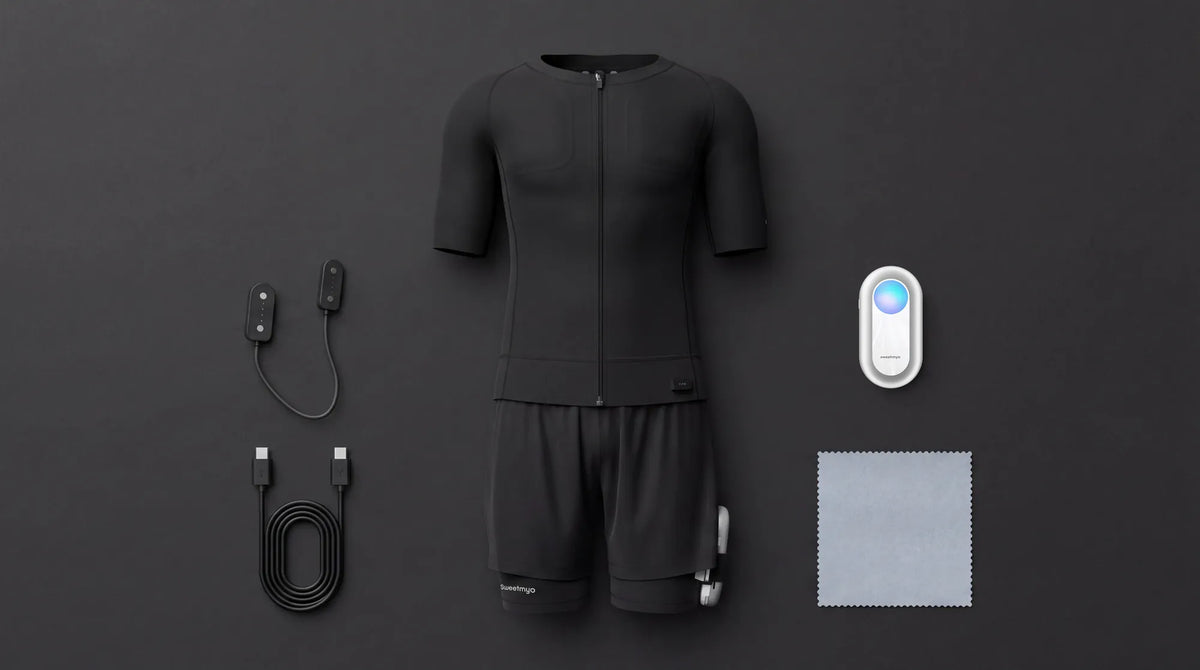
The Sweetmyo AI Full-Body EMS Suit is listed at $499. The package includes the EMS garment, NEXUS Hub, connector wire, USB cable, and cleaning cloth. Core device functions remain available without a required subscription; an optional subscription adds advanced programs, personalization, and premium content.
The current package also lists a one-year warranty. Returns and exchanges remain subject to the published policy: verified defects, an incorrect item, or shipping damage should be reported within seven calendar days of delivery. Worn products and change-of-mind returns are generally excluded, and requests made more than 30 days after delivery may not be accepted. Size selection is completed through measurements after the order, so buyers should submit accurate information before the suit is prepared.
For a first-year cost estimate, begin with the current purchase price and add any applicable tax, shipping, optional app plan, or extra accessories. Include optional services only when they are part of your intended routine.

Choose the System You Can Use and Maintain Consistently
Compare the complete package and calculate its long-term cost against the number of sessions you can realistically complete. The best-value system includes the hardware and core functions you need, fits correctly, and has care and support terms you can follow.
FAQs about EMS Suit Costs and Buying Decisions
Q1. Is an EMS Suit the Same as an EMS Belt or TENS Unit?
No. A full-body EMS suit uses integrated electrodes across several muscle zones. EMS belts and pad-based devices usually target one or a few areas. Compare coverage, intended use, controller requirements, and instructions before treating their prices as equivalent.
Q2. Do All EMS Suits Require a Monthly Subscription?
No. Some systems include their core app functions with the hardware, while others require a membership for initial or full access. Check what happens if you cancel: the device may retain full control, offer limited programs, or lose important functions.
Q3. Can Two People Share One EMS Suit?
Sharing may be impractical because the garment must fit closely and should be cleaned between users. Some systems offer two-suit packages with one shared controller or two controllers. Confirm sizing, hygiene instructions, controller compatibility, and whether simultaneous use is supported.
Q4. How Long Does an EMS Suit Last?
Service life depends on training frequency, washing, drying, storage, fabric wear, connector care, and controller handling. Follow the manufacturer’s care instructions and inspect the garment, electrodes, cables, and electronic unit regularly. Replace damaged components before another session.
Q5. Can You Buy a Replacement Suit Without a New Controller?
Sometimes. A replacement garment may work with an existing controller when the manufacturer sells it separately and confirms compatibility. Check the model, connector, sizing, electrode layout, app support, and warranty terms before buying a suit-only replacement.




コメントを書く
このサイトはhCaptchaによって保護されており、hCaptchaプライバシーポリシーおよび利用規約が適用されます。